
Top 5 Cybersecurity News
This week’s Top 5 Cybersecurity News for October 2, 2026 follows a pattern that has been building across the year: attackers are targeting the layers that other infrastructure trusts. A critical-severity zero-day in Cisco’s SD-WAN Manager — the console that programs an entire enterprise WAN — arrived in CISA’s Known Exploited Vulnerabilities catalog on September 30 with a three-day federal remediation deadline. A CVSS 10.0 authentication bypass in WSO2 API Manager has been actively exploited since mid-September, with sixteen public proof-of-concept repositories now available and one confirmed weaponized exploit in circulation. Citrix NetScaler’s twin zero-days from late September are still active: over 1,200 devices confirmed patched by their owners are still running attacker-planted web shells that survive reboots. Apple patched a CoreGraphics zero-day, reported by Meta’s security team as exploited in “extremely sophisticated” targeted attacks. And in Germany, a certification body that issues mandatory security credentials to energy-sector operators was breached for five days in September, with 640 gigabytes of grid infrastructure documentation exfiltrated — documents that were submitted by its KRITIS clients as certification evidence. Five different control layers, five different attack vectors, and a consistent strategic lesson about what it means when the infrastructure that verifies, controls, and connects everything else becomes the target.
1) Cisco Catalyst SD-WAN Manager: CVSS 9.8 Authentication Bypass, CISA KEV, Three-Day Federal Deadline

Cisco Catalyst SD-WAN Manager CVE-2026-76504: a URI-encoding bypass gives unauthenticated attackers full administrative API access to the console managing enterprise-wide WAN routing.
CVE-2026-76504 is an authentication bypass in Cisco Catalyst SD-WAN Manager, scored CVSS 9.8. The flaw sits in how the management API processes URI-encoded path sequences: a crafted request bypasses authentication entirely and lands directly on administrative endpoints, giving a remote unauthenticated attacker admin-level API access to the management console. CISA added it to the Known Exploited Vulnerabilities catalog on September 30 with a remediation deadline of October 3 — the tightest standard turnaround CISA issues for federal civilian agencies. Cisco confirmed active exploitation in customer environments before the patch was available. Fixed versions are 20.9.10.1, 20.12.8.2, 20.15.6.1, 20.18.4.1, 26.1.2.1, and 26.2.1; installations earlier than 20.9 must migrate to a fixed release.
For any organisation running Cisco’s SD-WAN infrastructure, the exposure here is not limited to the Manager host itself. The Manager is the control plane: whoever owns it can rewrite routing policies, insert packet-filtering rules, create VPN tunnels, and push firmware to every managed edge device. An attacker with unauthenticated API access to a production SD-WAN Manager is, in practice, positioned to redirect traffic, establish persistent access paths to branch sites, and surveil network flows without touching a single endpoint. The above assessment of downstream impact — routing policy changes, firmware pushes, network surveillance — reflects DIESEC’s analysis of what admin API access to the control plane enables; Cisco’s advisory confirms only the authentication bypass and access to administrative endpoints. Help Net Security reported this as the fifth exploited Cisco SD-WAN zero-day of 2026, a count not confirmed in the Cisco advisory itself, but consistent with a pattern of sustained adversarial research into this stack.
The remediation path is patching — no viable workaround fully mitigates an unauthenticated authentication bypass at the API layer. Organisations that cannot patch immediately should verify that SD-WAN Manager access is restricted to dedicated management networks and that no administrative interfaces are reachable from the internet. Logging and alerting on unexpected API calls or configuration changes should be in place before patching, not after: if the Manager has already been accessed, understanding the scope of any configuration changes is a prerequisite for verifying network integrity after remediation.
Read more on: SecurityWeek · BleepingComputer
2) WSO2 API Manager CVE-2026-5430: CVSS 10.0 JWT Bypass, CISA KEV, 16 Public PoC Repos

WSO2 API Manager CVE-2026-5430: improper JWT signature verification allows complete authentication bypass against all protected API endpoints, with exploitation confirmed since September 13.
CVE-2026-5430 is an improper cryptographic signature verification flaw (CWE-347) in WSO2 API Manager, versions 4.1.0 through 4.6.x, as well as WSO2 Traffic Manager, Universal Gateway, and API Control Plane. The vulnerability allows an attacker to forge a JWT token that passes validation without possessing the correct signing key, bypassing authentication against any API endpoint protected by WSO2’s token infrastructure. The CVSS score is 10.0 — the maximum. CISA added it to the Known Exploited Vulnerabilities catalog on September 24, with a federal remediation deadline of September 27. WSO2 shipped patches and issued a security advisory; affected organisations should update to the fixed release series for their product line immediately.
WSO2 API Manager is used by telecoms, financial institutions, healthcare systems, and platform operators globally as the gateway and authentication layer for their API estates. A CVSS 10.0 authentication bypass against that infrastructure is not simply a theoretical problem: it means an attacker can impersonate any legitimate user or service, call any API endpoint, and extract or manipulate data without triggering authentication-based alerting. The watchTowr honeypot project confirmed active exploitation beginning September 13, eleven days before CISA’s KEV addition. Sixteen public proof-of-concept repositories were catalogued on GitHub by the time of CISA’s announcement, with at least one assessed as a weaponized, operationally functional exploit rather than a demonstration script. The window between “public PoC available” and “mass exploitation begins” for CVSS 10.0 flaws in this class has historically been measured in hours, not days.
Patching is the only fully effective remediation. For organisations that cannot patch within the standard emergency window, WSO2’s security advisory describes available mitigations including token validation configuration hardening, but these are acknowledged as partial controls rather than fixes. API access logs should be reviewed from September 13 forward for any unexplained token validation events, unusual API call patterns, or access from unexpected source IP ranges. Any API that carries sensitive data — customer records, payment information, medical records — should be treated as potentially exposed if WSO2 API Manager versions in the affected range were running without the fix in place during that period.
Read more on: CISA KEV Catalog · Security Affairs
3) Citrix NetScaler CVE-2026-88771/88772: Backdoors Survive Patching on 1,200+ Devices

Citrix NetScaler CVE-2026-88771 and CVE-2026-88772: attacker-planted web shells persist across firmware updates on more than 1,200 devices whose owners applied the available patch.
CVE-2026-88771 and CVE-2026-88772 are twin zero-days in Citrix NetScaler ADC and Gateway, both rated CVSS 9.5, disclosed September 27, 2026, when exploitation was already confirmed in the wild. CVE-2026-88771 is an improper input validation flaw in the default configuration path, enabling unauthenticated remote code execution without any prerequisites. CVE-2026-88772 is a DTLS memory overflow that also leads to remote code execution or denial of service. Citrix added them to its security bulletin simultaneously. CISA confirmed CVE-2026-88772 in the KEV catalog on September 27. Fixed builds are NetScaler 14.1-73.37 and 13.1-64.23 and later in each respective branch; the 12.x line reached end of life in June 2025 and will not receive a fix.
The detail that elevates this story beyond a standard patch-and-move-on situation is the persistence finding. Security researchers examining compromised NetScaler appliances found that attackers planted web shells and backdoors before device owners applied the available patch — and those implants survived the firmware update. More than 1,200 appliances confirmed by their administrators to be running the patched firmware version still carried active attacker footholds as of the most recent scanning data. This is the same persistence mechanism that has been observed in previous Citrix zero-day exploitation cycles: the attacker writes to a path that the firmware update process does not overwrite, and the backdoor remains in place regardless of what the changelog says about the vulnerability being fixed. Patching closes the initial entry point; it does not evict an attacker who is already inside.
For any organisation running Citrix NetScaler, two separate remediation actions are required. The first is applying the fixed firmware version. The second is conducting a post-patch compromise assessment of every appliance that was reachable before the fix was applied. That means reviewing web server directories for unexpected files, checking running processes against known-good baselines, examining outbound network connections from the appliance for unexplained sessions, and validating SSL certificate configurations for signs of interception. If a NetScaler device has been internet-facing since before September 27, it should be treated as potentially compromised until that review is complete, regardless of the current firmware version displayed in the management console.
Read more on: CISA KEV Catalog · BankInfoSecurity
4) Apple CVE-2026-86950: CoreGraphics Zero-Day in “Extremely Sophisticated” Targeted Attacks

Apple CVE-2026-86950: an out-of-bounds write in the CoreGraphics framework was exploited in targeted attacks on specific individuals before iOS 26.7.1 was available.
CVE-2026-86950 is an out-of-bounds write vulnerability in Apple’s CoreGraphics framework — the low-level rendering layer present in iOS, iPadOS, and macOS. Apple patched it in iOS 26.7.1, iPadOS 26.7.1, and macOS Tahoe 26.7.1, released September 28, 2026. The company’s security notes describe the exploitation context in the terms it uses for its most serious confirmed cases: the vulnerability “may have been exploited in extremely sophisticated attacks against specific targeted individuals.” The flaw was reported to Apple by Meta’s Product Security team.
The specific details matter here. “Extremely sophisticated” is Apple’s highest-severity exploitation qualifier in its public disclosures; it typically indicates active use by a threat actor with significant technical capability rather than mass exploitation. The involvement of Meta’s Product Security team in the discovery, combined with the targeting description, is consistent with a spyware or targeted surveillance operation — the kind of attack chain used by commercial surveillance vendors and advanced nation-state actors to compromise the devices of journalists, dissidents, diplomats, and executives. CoreGraphics is a foundational framework: rendering vulnerabilities in that layer can be triggered by processing a malicious image or document, without requiring the user to click on a link or install an application.
For most organisations, the practical response is update management: iOS 26.7.1, iPadOS 26.7.1, and macOS Tahoe 26.7.1 should be deployed to managed devices without waiting for the next scheduled update cycle. For organisations with elevated risk profiles — executive protection, legal, finance, government contracting, critical infrastructure — this zero-day warrants a specific communication to at-risk staff about the importance of updating personal devices as well as corporate-issued ones. The “extremely sophisticated targeted attacks” framing also serves as a reminder that mobile device security is not separable from the enterprise security posture: personal iPhones used for business communications represent a real attack surface, and MDM enrollment alone does not guarantee timely patching.
Read more on: Apple Security Advisory · Help Net Security
5) GUTcert KRITIS Breach: 640 GB of German Energy Grid Documentation Exfiltrated
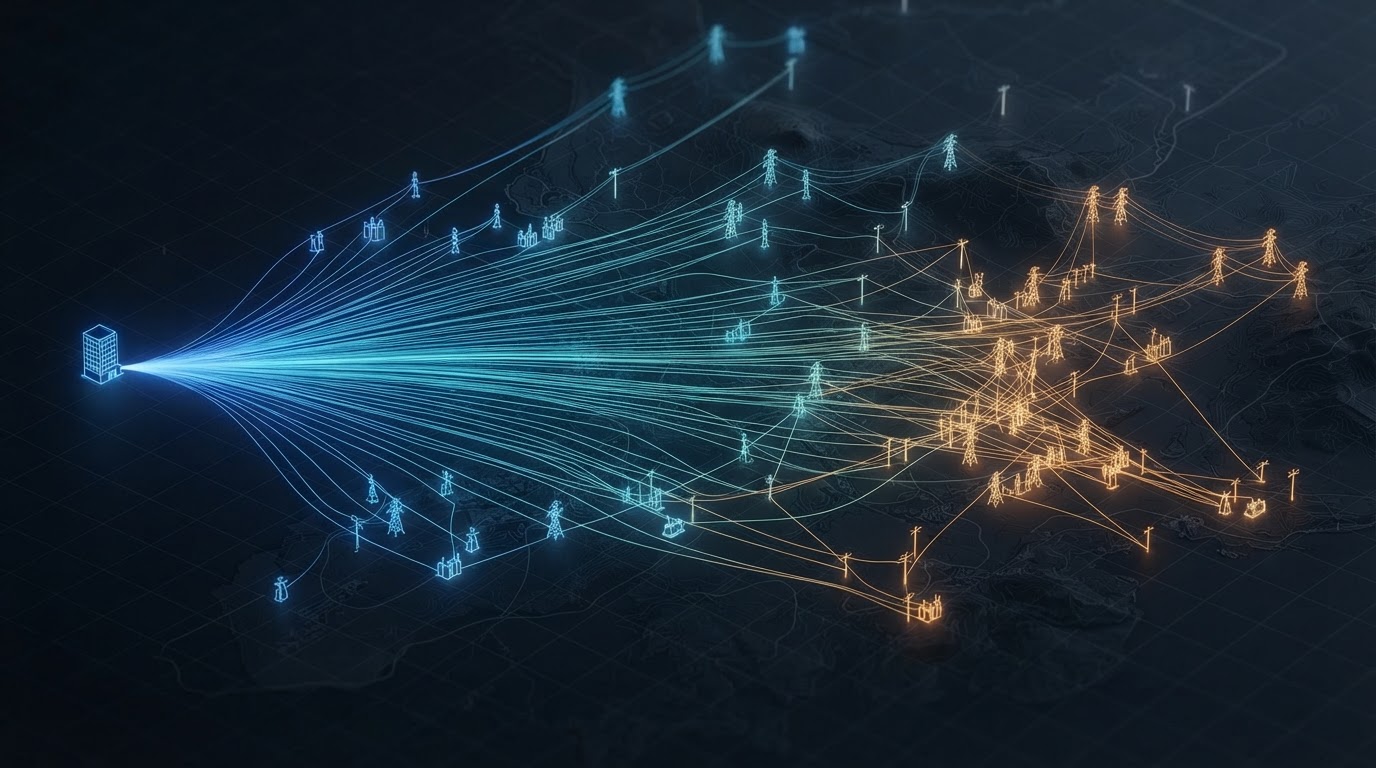
GUTcert KRITIS breach: the Berlin certification body was compromised for five days in September 2026, with 640 GB of KRITIS client documentation — including energy grid infrastructure data — exfiltrated.
GUT Certifizierungsgesellschaft für Managementsysteme mbH (GUTcert), a Berlin-based certification body that issues mandatory ISO 27001 and energy-sector “IT-Sicherheitskatalog” credentials to German KRITIS (critical infrastructure) operators, was breached between September 5 and 9, 2026. Approximately 640 gigabytes of data were exfiltrated during the five-day intrusion. The stolen material reportedly includes network topology plans and substation location documentation submitted by energy grid operators as part of their mandatory certification evidence package, as well as broader IT/OT infrastructure documentation from the certification body’s KRITIS client base. Extortion contact attempts followed on September 12, 15, and 20. On September 24, Darmstadt-based energy utility ENTEGA AG confirmed in a public press release that it is a downstream victim of the breach. Security researcher Günter Born noted in his coverage that further German KRITIS operators are expected to surface as affected in the coming weeks.
The structural significance of this incident goes beyond the data volume. GUTcert’s business is to verify that its clients meet the security standards required for operating critical German infrastructure — which means those clients submit detailed documentation of their actual infrastructure as part of the certification process. That documentation — the kind of material that would normally require an advanced persistent threat actor months of reconnaissance to assemble — was held in one place by the certification body and accessed in a single five-day operation. ENTEGA AG is not a second-order victim in the sense of being collateral damage; the documentation it submitted as certification evidence is now in the possession of whoever conducted the breach. No CVE has been assigned because this is a targeted breach, not a disclosed software vulnerability.
This story carries a specific lesson for any organisation that works with certification bodies, auditors, compliance assessors, or managed security providers: the documentation you submit as evidence of your own security posture is itself a high-value target. Reviewing what has been shared with third parties — and what access controls those parties have in place — is not just a vendor risk management formality. It is a direct component of your own exposure surface. For German operators in the energy, water, and transport sectors specifically, the question of whether GUTcert held your infrastructure documentation during the September 5–9 window should be answered before any assumption of safety is made.
Read more on: Borncity (Günter Born) · CIO.de
If this week tells us anything, it’s this:
The five stories above share a structural pattern. Cisco’s SD-WAN Manager is the console that controls WAN routing. WSO2 API Manager is the gateway that authenticates access to API services. Citrix NetScaler is the device that handles SSL inspection and load balancing at the network edge. Apple CoreGraphics is the rendering layer that processes every image on every iOS and macOS device. GUTcert is the body that certifies whether other organisations have adequate controls in place. None of these are the applications running on top of the infrastructure. All of them are the infrastructure itself. The implicit assumption in most security programmes is that patching applications on top of a known-good infrastructure is sufficient. This week makes a different argument: when the control layer, the authentication layer, the edge device, the device framework, and the certifying authority are all compromised simultaneously, the question is not whether your controls work. The question is whether you can still trust the foundation those controls are built on.
Attackers have always preferred to operate at a level of abstraction higher than defenders are watching. Owning a single SD-WAN Manager is more efficient than compromising fifty branch-site routers individually. Bypassing authentication at the API gateway is more efficient than attacking each protected service behind it. Stealing the certification documentation database is more efficient than running targeted reconnaissance against individual KRITIS operators. These are not opportunistic attacks. They are precise choices about where leverage sits in complex infrastructure — and the decisions were made correctly, from the attacker’s perspective. Cybersecurity strategy that focuses primarily on endpoint detection and application-layer controls needs to account for this shift explicitly. The infrastructure that other infrastructure trusts is an attack surface, and it deserves the same visibility, monitoring, and patch urgency as the systems it supports.
If any of these vulnerabilities affect systems in your environment and you need help assessing exposure or prioritising remediation, the DIESEC team is here to help.