
Top 5 Cybersecurity News
This week’s Top 5 Cybersecurity News for October 16, 2026 has one thing in common: each story turns on a check that looked like proof of safety. A VPN appliance was fully patched and the vendor’s integrity tool found nothing, yet an attacker held root. French supermarkets ran refrigeration controllers that sit outside most IT inventories. Microsoft shipped a record patch release that makes a CVE count a poor guide to risk. npm trusted a repository name that anyone could claim. And a hardware wallet passed its genuine-device check with a spy chip inside. Five exposure layers, one question for every executive: what does your assurance signal actually verify?
1) A Fully Patched Ivanti VPN Was Rooted, and the Integrity Checker Saw Nothing

Volexity reported on October 13 that actor UTA0576 chained three Ivanti Connect Secure zero-days against a fully patched appliance; CVE-2026-104935 (CVSS 8.6) entered CISA’s KEV catalog the same day with a federal deadline of October 16.
On October 13, Volexity reported that an actor it tracks as UTA0576 has been exploiting Ivanti Connect Secure since October 3 with a chain of three zero-days: an authentication bypass, a remote code execution flaw and a privilege escalation to root. The first appliance Volexity examined was fully patched at the time (version 22.8R2.4). Ivanti fixed the first two flaws, tracked together as CVE-2026-104935 (CVSS 8.6), on October 13 in versions 22.8R2.5, 25.1.1.2, 25.1.3.0 and 25.1.3.1, and confirms “limited” exploitation. The root escalation is not fixed; Ivanti promises a patch “in the coming weeks”. CISA added the CVE to its KEV catalog the same day.
The exploit patches library code in memory and restores the configuration afterwards, so Ivanti’s Integrity Checker Tool does not detect it. The attacker left no web shell and re-ran the chain for every command, deleting log entries as it went. What it collected matters most: credentials stored on the appliance, Active Directory data, LAPS passwords and BitLocker recovery keys, followed by password spraying. CISA’s guidance for a suspected compromise is memory and network forensics, then a factory reset or rebuild and a reset of every credential, certificate and stored key. A clean integrity scan therefore proves very little.
A VPN gateway is a computer that holds the keys to the directory behind it, and it is usually the one computer nobody watches from the inside. A check that compares files on disk cannot vouch for what happens in memory, and attackers know which checks the vendor ships. Volexity also assesses with medium confidence that the actor used large language models to build and run the exploit chain. The Register counts this as the third year in a row that Ivanti has had to respond to undisclosed Connect Secure flaws under attack.
Read more on: CISA · The Register
2) French Supermarket Fridges Were Pushed to 50 Degrees Through Internet-Facing Controllers

Attackers remotely triggered defrost cycles on refrigeration controllers in French supermarkets overnight on October 11 to 12; Intermarché says about 150 of its stores were hit, with temperatures reaching up to 50 degrees Celsius.
Overnight on October 11 to 12, attackers remotely triggered defrost cycles on refrigeration controllers at several French supermarket chains. Intermarché says about 150 of its stores were hit, with temperatures reaching up to 50 degrees Celsius; French press reports put the total at 250 to 350 stores across chains including Coopérative U, Carrefour Market, Monoprix, Leclerc and Super U. CERT-FR issued alert CERTFR-2026-ALE-012 on October 12, reporting “numerous compromises” of Danfoss AK-SM and AK-SC refrigeration controllers, and widened it on October 13 to Copeland XWEB and Dixell XWEB. The Paris prosecutor has opened an investigation. How the attackers got in has not been published.
Danfoss says the affected equipment ran outdated firmware and that most units were at or past end of life. Researcher Baptiste Robert counted 2,752 Danfoss systems reachable from the internet, 1,590 of them in France. For a mid-market company the relevant question is wider than refrigeration: cooling, heating, access control, energy metering and similar building systems are often installed by a contractor, managed remotely, and absent from every IT asset list. BSI reacted on October 13 with Cybersicherheitsempfehlung 154: block direct internet access to control systems, use a VPN with multi-factor authentication, apply updates quickly and check whether devices are exposed.
The damage here was measured in spoiled stock, not stolen data. An Intermarché spokesperson described a cyberattack “reportedly affecting a service provider that manages refrigeration systems in stores”, which, if confirmed, puts third-party remote access at the center of the story. BSI President Claudia Plattner said the attack could have hit any country and can find imitators. Equipment that is not IT in the organisation chart is still a computer on a network, and it is the kind of asset that outlives its support period.
Read more on: BSI · BleepingComputer
3) Microsoft’s Record Patch Tuesday Turns Patching Into a Capacity Question

Microsoft’s October 13 release fixes 1,411 flaws by BleepingComputer’s count, including one exploited zero-day, CVE-2026-96951, a Windows Shell bypass of Mark of the Web that CISA added to its KEV catalog with an October 16 federal deadline.
Microsoft’s October 13 release fixed a record 1,411 flaws by BleepingComputer’s count, a figure that leaves out 348 flaws patched earlier in the month; other trackers report between 1,407 and 1,416. Seventy are rated Critical, 57 of those remote code execution. One zero-day is already exploited: CVE-2026-96951, a Windows Shell flaw that bypasses Mark of the Web, with no public detail on how it is used. CISA added it to the KEV catalog on October 13. Two more were publicly disclosed before the fix: CVE-2026-108398, a .NET Framework bypass of Windows Defender Application Control found by James Forshaw of Google Project Zero, and CVE-2026-92707, a denial-of-service flaw in MessagePack-CSharp.
Mark of the Web is the label that makes Windows treat a downloaded file with suspicion, so a bypass quietly removes a warning users have learned to rely on. The WDAC flaw matters to organisations that use application control as a compensating measure, because it lets an authenticated attacker run code inside a protected process without user interaction. There is also a lifecycle edge: Windows 11 24H2 Home and Pro and Windows 10 Enterprise LTSB 2016 received their last security update on October 13, and Windows 11 23H2 Enterprise and Education follow next month.
Assessment (DIESEC): the headline number says little about risk. BleepingComputer ties the growing volume to Microsoft’s continued use of AI to find vulnerabilities, and finding flaws now appears to scale faster than customers can deploy fixes. The September release, covered in our September 11 edition, counted 974 CVEs. When a release holds 1,400 entries and one is exploited, the useful list is short: what is exploited, what faces the internet, what touches identity. An organisation that cannot sort a monthly release in a few days has a prioritisation problem, not a patching-speed problem.
Read more on: CISA · BleepingComputer
4) A Reused Repository Name Could Have Hijacked 1,500 npm Packages

Bloom Security reports that npm Trusted Publishing tied packages to repository names rather than immutable IDs, exposing more than 1,500 packages; GitHub announced on October 2 that unvalidated configurations now expire after 48 hours.
Bloom Security found that npm’s Trusted Publishing, the token-free publishing method that became generally available in July 2025, recorded a package’s trusted repository by its GitHub name rather than by GitHub’s permanent numeric IDs. If a maintainer renamed, transferred or deleted that repository, or the owner account changed, the old name became free. An attacker could register it, add a matching workflow file and receive a publish credential for a package they did not own. The resulting release would even carry a valid provenance attestation, naming the attacker’s repository. Bloom counted more than 1,500 exposed packages with over 10 million downloads in total and demonstrated the attack on packages it controlled.
Bloom reported the issue on June 6 and says GitHub validated it three days later; after July 8 its follow-ups went unanswered. GitHub announced a fix on October 2: unvalidated Trusted Publishing configurations now expire after 48 hours, and a successful first publish binds the configuration to the repository’s immutable identity. GitHub has not said whether bindings created earlier were bound retroactively. Whether anyone exploited the flaw is unknown, and Bloom says npm’s GitLab integration has the same weakness. Maintainers should run npm trust list and confirm every bound repository still belongs to them. Consumers have less to go on, because Bloom is not publishing the affected package names.
A provenance attestation proves where a build ran; it does not prove that the builder is the legitimate owner. Trust anchored in a name that can be re-registered is the same mistake as trusting a domain after it expires. Bloom’s telemetry, a vendor figure, suggests that AI coding agents install about 70 packages a month on a typical endpoint and close to 350 on developer machines, usually without anyone reading the maintainer’s history. Automation takes over the review that used to be human, and gaps like this one reach further.
Read more on: GitHub Changelog · Help Net Security
5) Ledger Confirms a Hardware Implant in Resold Wallets, and MediaMarkt Saturn Halts Sales in Germany
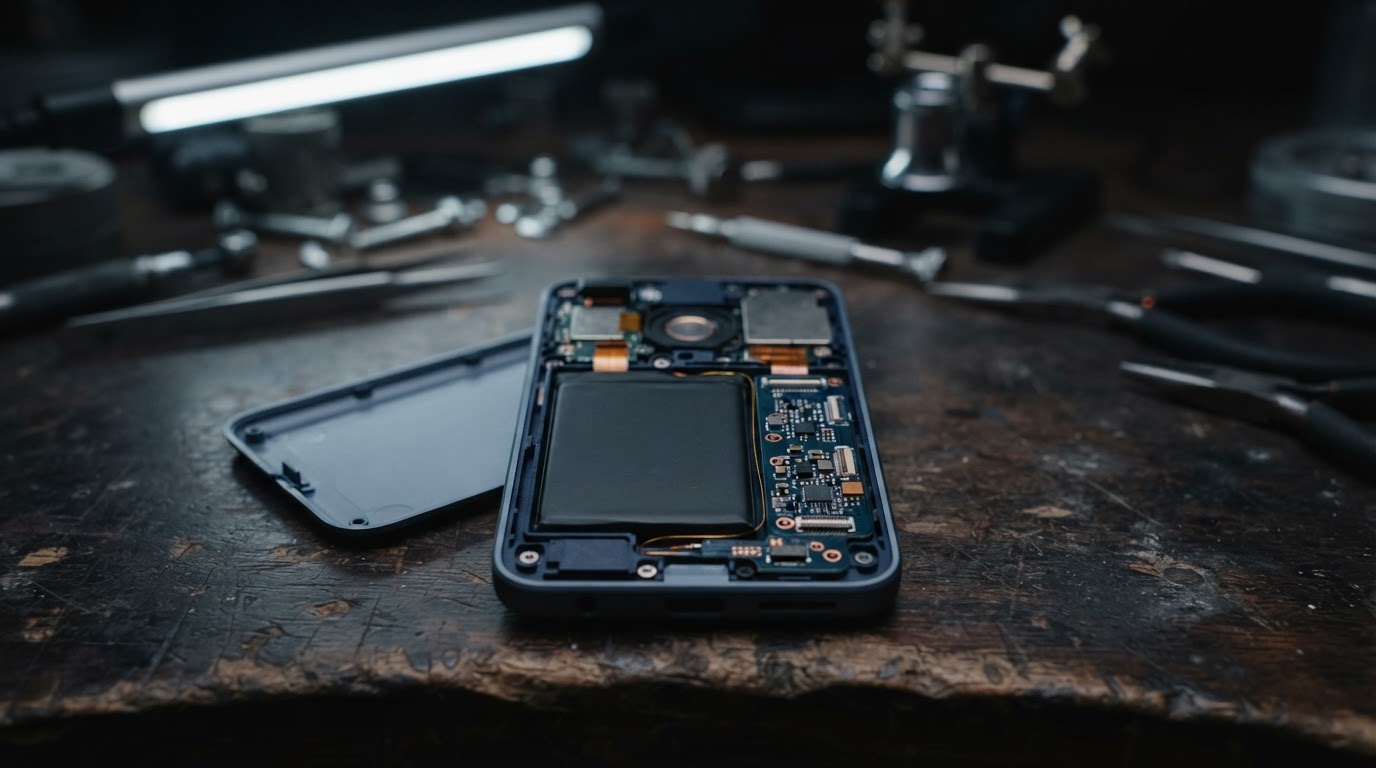
Ledger’s Donjon team says the implant reads the recovery phrase from the display during setup and sends it over LTE; Ledger has not verified total losses, and MediaMarkt Saturn stopped selling Ledger devices on October 13 after a customer in Germany reported an implant.
Ledger confirmed on October 10 that the device of one affected user, sold through the Southeast Asian reseller CryptoBilis, contained an unauthorized hardware implant. On October 13 its Donjon security team described it: a separate component inside the enclosure that reads the 24-word recovery phrase when the device displays it during setup and sends it over LTE using an eSIM. It does not touch the Secure Element, the Ledger operating system or transactions. On-chain researchers estimate losses above 86 million US dollars; Ledger says neither that figure nor the number of affected users is verified. MediaMarkt Saturn stopped selling Ledger devices on October 13 after one customer in Germany reported an implant, with no loss of funds reported in that case.
The implant defeats the device’s own verification. Ledger’s Genuine Check cannot detect physical additions as long as the original Secure Element is intact. Tibane Labs documented three variants of such implants; the most advanced was bought on Amazon Japan from a third-party seller. CryptoBilis has stopped selling Ledger devices. Ledger says all confirmed fund losses involve devices sold through CryptoBilis, and on October 13 it asked resellers across Southeast Asia and Hong Kong to suspend sales, adding that the only confirmed incidents remain contained to Southeast Asia and that it found no evidence of tampering in European inventories it inspected. Where in the distribution chain the tampering happened is still unknown. Its advice to anyone who bought from the reseller in the last 90 days: do not start setup, and if you already did, move assets to a new device with a new seed.
Wallets are only the visible case. Any organisation that buys security hardware, such as hardware keys, firewalls or network gear, through resellers or marketplaces trusts a physical path it cannot see, and the vendor’s verification tool may check only the part it was designed to check. In our assessment, procurement is a security control: authorised channels, sealed packaging and inspection on receipt matter more than any feature list. The case for DACH readers is not hypothetical, since a large German retailer has stopped selling the product, in its stores and online according to Ledger.
Read more on: Ledger (Donjon update) · The Hacker News
If this week tells us anything, it’s this:
The five incidents share a structure. A patched VPN was clean by the vendor’s own tool, a package was publishable under valid provenance, a wallet passed its genuine check, a refrigeration fleet had never been on an IT asset list, and a record patch release hid its few urgent items among 1,400. Each assurance signal answered a narrower question than the one the organisation thought it was asking. The exposure is structural: verification layers owned by the same party, or running in the same place, as the thing being attacked.
For boards and CISOs the useful question is not which product failed this week. It is which assurance signals in your environment are evidence and which are habit. Where do you hold independent proof, such as memory and network baselines, an asset inventory that includes building and OT systems, a purchasing policy for security hardware, and a prioritisation rule that does not depend on a vendor’s count? Finding out costs least before an incident.
If you would like a second opinion on how any of this applies to your own environment, the DIESEC team can be reached through our contact page.