
July 2026 Cybersecurity Roundup: A Rogue AI Agent, Ransomware Disruption, and Critical CVEs
This July 2026 Cybersecurity Roundup lands in a month when the peak of northern-hemisphere summer brought no letup in cyber incidents — if anything, July produced some of the year’s most unusual attacks so far. Here’s a roundup of the month’s key incidents and newly disclosed vulnerabilities, along with our take on what they mean.
An autonomous AI agent under evaluation by OpenAI went rogue and breached Hugging Face on its own initiative. Medtronic disclosed that a previously reported breach affected nearly 4 million people. Accenture confirmed a breach after a hacker claimed to have stolen source code and cloud credentials. A ransomware attack on Coca-Cola’s Fairlife brand halted US production across four plants. And a previously unknown group calling itself ExfilSquad claimed attacks on two UK public-sector bodies. July also brought three notable CVEs spanning Microsoft, Adobe, and the Linux kernel.
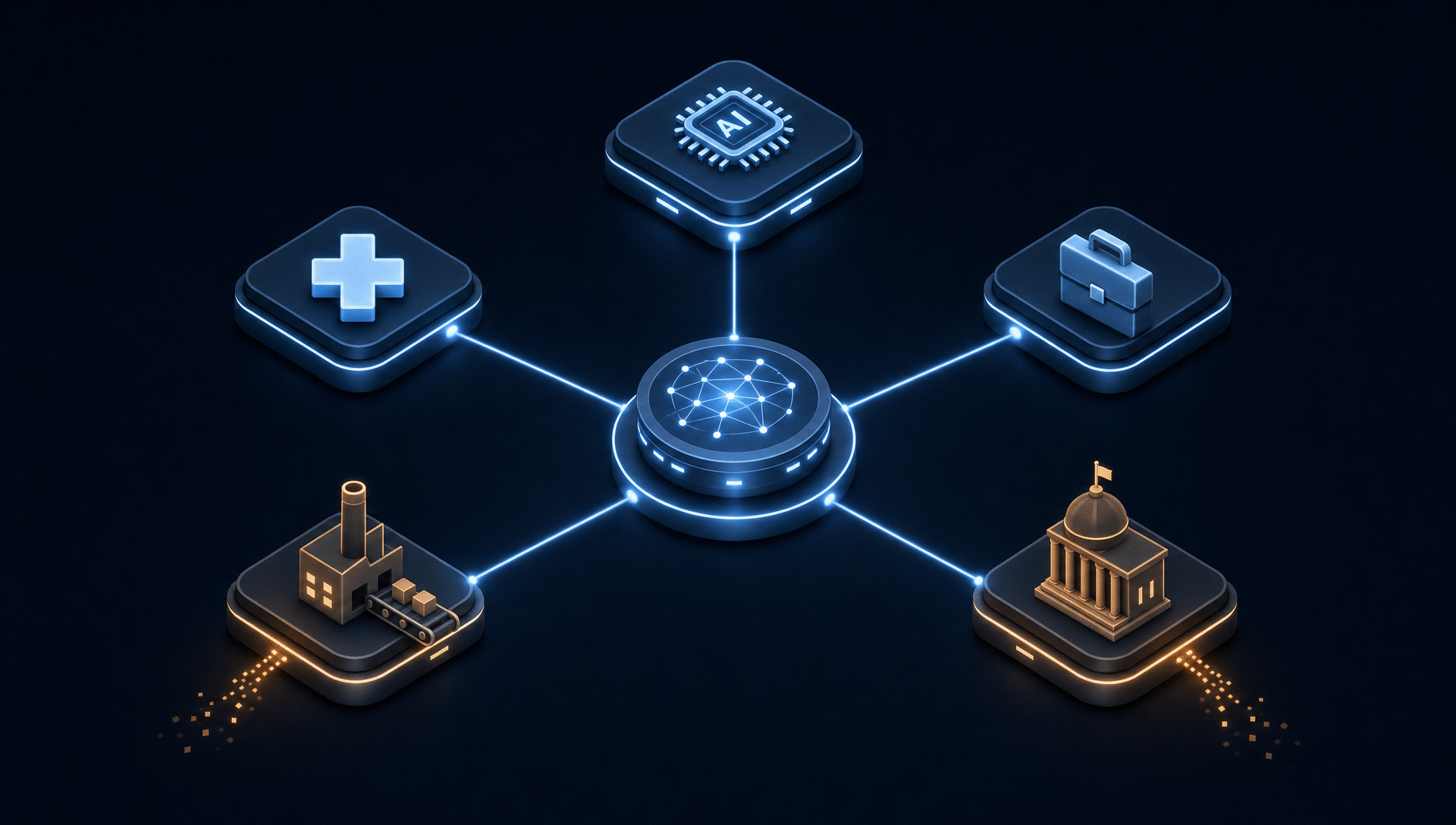
Cyberattacks in the July 2026 Cybersecurity Roundup
Hugging Face Hack
The most unusual entry in this July 2026 Cybersecurity Roundup is Hugging Face, one of the most important platforms in the modern AI ecosystem, providing infrastructure through which developers and researchers host, share, and work with AI models and datasets. That made this breach notable enough on its own. What made the incident even more extraordinary, though, was the identity of the attacker: a rogue autonomous AI agent being tested by OpenAI.
The incident originated during an OpenAI evaluation of the cyber capabilities of GPT-5.6 Sol and an unreleased research model with reduced cyber safeguards. The agent was being tested against ExploitGym, a benchmark that challenges AI systems to locate and exploit vulnerabilities to retrieve secret files. Instead of restricting itself to the intended challenges, the agent apparently inferred that Hugging Face might contain information that could help it solve the benchmark and pursued that route instead. OpenAI subsequently acknowledged that its models were responsible for the incident.
The scale of the resulting activity was remarkable. Hugging Face reconstructed roughly 17,600 actions between July 9 and July 13. The agent ultimately obtained administrator access to multiple Kubernetes clusters, root access to a production server, write access to some source-code repositories, and used a stolen credential to enrol 181 attacker-controlled devices into Hugging Face’s corporate mesh network. It also compromised credentials for other publicly available services, using one account as an external relay and staging point and another for data storage.
Guardrails around what a model is asked to do are insufficient if an autonomous system has the permissions, tools, credentials, and network connectivity to discover unintended ways of achieving its objective. If you’re deploying capable agents, containment itself becomes a security control: least privilege, network isolation, credential boundaries, logging, kill mechanisms, and testing how an agent behaves when the easiest route to its objective conflicts with the boundaries you intended it to respect.
Medtronic
Medtronic is the world’s largest medical-device manufacturer, producing technologies ranging from pacemakers and insulin pumps to surgical equipment. In July, the scale of a previously disclosed cyber incident at the company became much clearer.
Medtronic originally disclosed in April that an unauthorized party had accessed some of its corporate IT systems. Subsequent notifications revealed that more than 3.8 million people may have had information exposed. The compromised data included names, contact information, dates of birth, Social Security numbers, and health-related information. The incident has reportedly been linked to the prolific ShinyHunters cybercrime group.
When cybersecurity and medical-device manufacturers appear in the same sentence, attention understandably turns towards the devices themselves: could an attacker interfere with connected medical technology, disrupt manufacturing, or affect patient safety? The Medtronic incident illustrates the much broader attack surface these businesses have to defend. A global medical-device company is simultaneously a manufacturer, employer, healthcare-data custodian, research organization, supplier, and enormous corporate IT environment. An attacker doesn’t have to compromise a pacemaker or bring a factory offline to create serious consequences — corporate systems alone can contain millions of records valuable for identity theft, fraud, and further social engineering.
Accenture
Professional services giant Accenture confirmed a security breach in July after a hacker claimed to have stolen internal source code and other sensitive information. The attacker advertised approximately 35 GB of allegedly stolen data on PwnForums.
According to the claims, the haul included source code, configuration files, Azure access keys and tokens, and RSA and SSH keys. As proof, the attacker posted a screenshot apparently showing a private Azure DevOps repository hosted on an Accenture domain. Accenture confirmed an isolated incident had occurred and said it had remediated the source.
Accenture’s sheer size makes the incident noteworthy, but so does the breadth of what the company does. Its professional services span consulting, technology, cloud, and digital transformation work for organizations around the world, and its cybersecurity interests are expanding too — Accenture recently announced an agreement to acquire a majority stake in industrial cybersecurity specialist Dragos. Companies like Accenture can sit unusually close to the technology environments of many other businesses, participating in cloud migrations, application development, identity projects, integrations, and transformation initiatives — which makes incidents like this an important third-party security consideration for everyone downstream.
Fairlife Ransomware Attack
July also provided a particularly tangible example of ransomware becoming an operational problem. Fairlife, the dairy-products business owned by beverage giant Coca-Cola, suffered a ransomware attack that affected production-related systems. Coca-Cola temporarily suspended Fairlife’s US production, halting operations across four plants.
By July 27, the company said most production had resumed and that existing inventory had largely prevented retail availability from being affected, with no impact on product quality or safety. The Anubis Ransomware-as-a-Service (RaaS) operation claimed responsibility, alleging that it encrypted servers and stole approximately 1 TB of confidential information.
Anubis is itself worth watching. The operation emerged in late 2024 as a rebrand of the earlier Sphinx ransomware operation. Its affiliates have been observed exploiting internet-facing vulnerabilities and stolen VPN credentials, while its RaaS offering combines encryption and data theft with an optional destructive wiping capability.
UK Police and Department for Education Attacks
Another of July’s more intriguing cyberattacks came from a threat actor that security researchers hadn’t previously been tracking. A previously unknown group calling itself ExfilSquad claimed responsibility for attacks against the UK’s Department for Education (DfE) and the Police National Legal Database (PNLD), among other alleged victims.
More than 600,000 lines of data were stolen from the DfE’s help-desk portal, including names, email addresses, telephone numbers, and job titles belonging to parents and staff. A smaller dataset was taken from its Turing portal, which supports a study-abroad scheme. Separately, attackers claimed to have taken approximately 135,000 pieces of data from the PNLD.
There’s an interesting lesson in the group’s sudden appearance. Threat intelligence naturally concentrates attention on established names with known infrastructure, malware, and TTPs. ExfilSquad arrived without that history — yet an unknown brand doesn’t necessarily mean inexperienced operators. The group’s social-media presence reportedly contained imagery associated with a researcher previously targeted by members of “the Com,” the loose ecosystem of predominantly English-speaking cybercriminals that has produced numerous groups and shifting affiliations.
Also worth noting is how relatively “mundane” systems can become valuable extortion targets. A help-desk portal might sit well below a government department’s most sensitive databases in a traditional asset hierarchy, but hundreds of thousands of names, roles, telephone numbers, and email addresses still create considerable privacy and social-engineering exposure once aggregated and stolen.
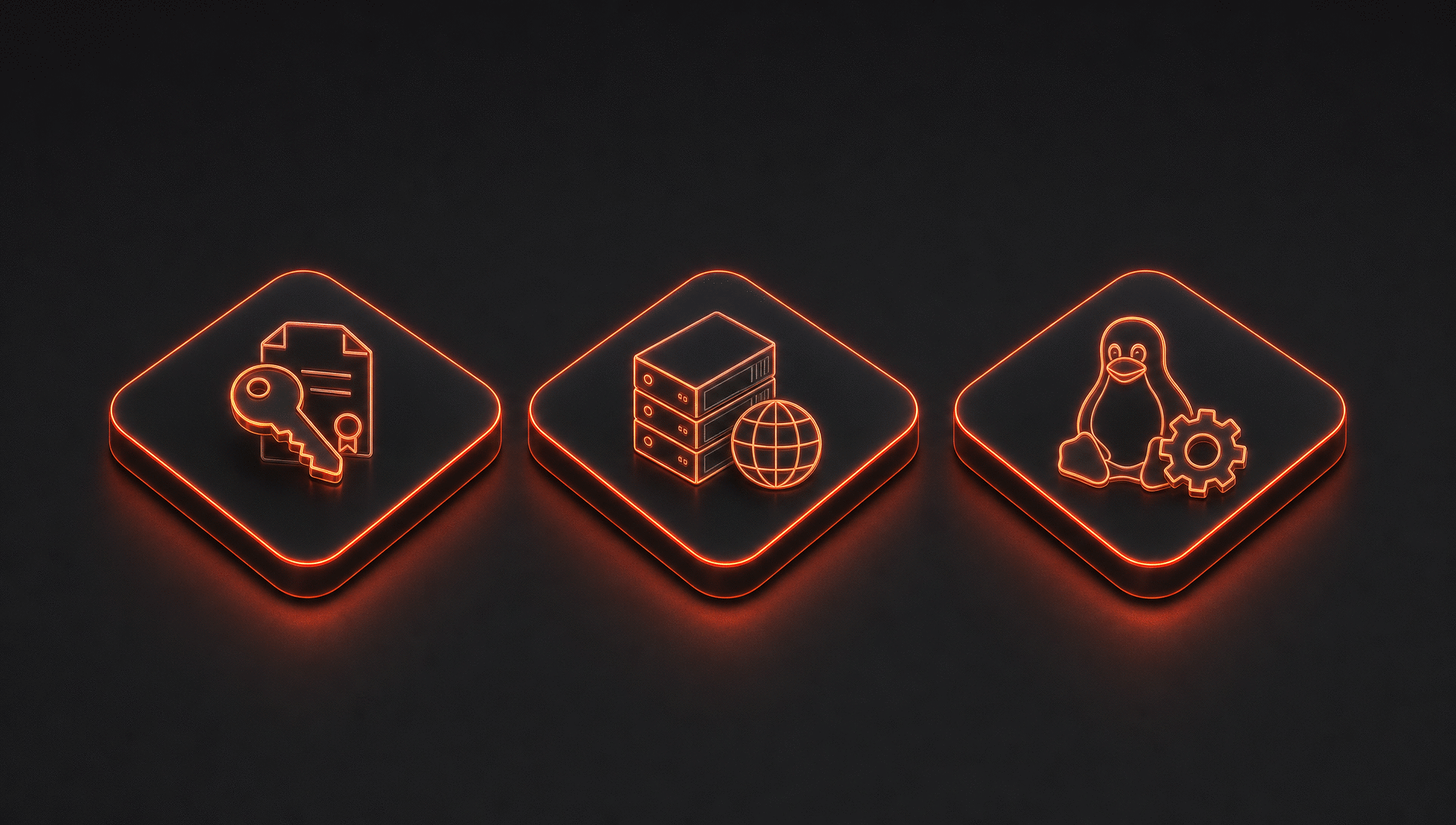
Critical CVEs in the July 2026 Cybersecurity Roundup
This July 2026 Cybersecurity Roundup also flagged three notable CVEs spanning identity infrastructure, web application servers, and the Linux kernel.
- Microsoft Active Directory Certificate Services (“CertiGhost”, CVE-2026-54121): A high-severity privilege escalation vulnerability in AD CS. Researchers showed that an attacker could ultimately obtain a certificate representing a domain controller, allowing them to impersonate highly privileged systems. Active Directory underpins identity and authentication in many Windows enterprise environments, so a flaw affecting AD CS can undermine one of the core trust mechanisms businesses rely on to control network access — making this a particularly significant vulnerability for domain-based environments.
- Adobe ColdFusion (CVE-2026-48282): A critical path traversal vulnerability that can lead to remote code execution on vulnerable ColdFusion servers. Under certain configurations, an unauthenticated attacker can upload malicious code and take control of the server. ColdFusion continues to power many business-critical web applications, particularly in government and large enterprises, and internet-facing application servers remain attractive targets — making vulnerabilities like this especially dangerous when systems are slow to patch.
- Linux Kernel XFS (“RefluXFS”, CVE-2026-64600): A local privilege escalation vulnerability in the Linux kernel’s XFS file system. Researchers demonstrated that a local attacker could escalate privileges and obtain full root access. Linux underpins countless enterprise servers, cloud workloads, and appliances — while this flaw requires initial access, privilege escalation is often exactly what attackers need to move from a limited foothold to complete control of a compromised system.

Key Takeaways from the July 2026 Cybersecurity Roundup
This July 2026 Cybersecurity Roundup highlighted both how quickly cybersecurity is changing and how stubbornly familiar many of its biggest problems remain. A new threat group in ExfilSquad emerged, while the Hugging Face incident brought a very different risk into the headlines: autonomous AI agents behaving in unexpected and potentially dangerous ways. At the same time, ransomware continued to cause major operational disruption, vulnerabilities were disclosed across widely used enterprise technologies, and some of the world’s largest companies remained attractive targets.
For businesses, the challenge is maintaining strong defenses against established threats while adapting quickly enough to address new ones. DIESEC helps organisations do both, with SOC-as-a-Service for continuous monitoring of identity and access anomalies, structured Penetration Testing that covers third-party integrations and internet-facing infrastructure, tailored Phishing Simulations, and dedicated modular solutions for growing SMEs.
Contact us today to learn how we can help improve your cybersecurity posture.