
Top 5 Cybersecurity News Stories August 21, 2026
This week’s Cybersecurity News Stories August 21, 2026 arrives at a moment when the breadth of simultaneous active exploitation across enterprise infrastructure demands attention that goes beyond any single advisory. Within a seven-day window, CISA added five separate vulnerabilities to its Known Exploited Vulnerabilities catalogue across five entirely different product categories: VMware vCenter, Microsoft SharePoint, Apple macOS, the MLflow machine learning platform, and Cisco’s firewall and VPN appliance line. Each carries a critical or high severity score. Each was actively exploited before many organisations had applied the available patch. Taken together, they describe the same targeting logic that has defined 2026’s threat landscape: systematic, cross-layer exploitation of the infrastructure components that organisations treat as foundational — and therefore monitor least, patch last, and trust most.
1) China-Nexus Actor Exploits VMware vCenter CVE-2026-59310, Deploys Babuk-Derived Ransomware Across 47 Countries
Broadcom released patches for CVE-2026-59310 — a CVSS 9.8 path traversal vulnerability in the Syslog Server component of VMware vCenter — on July 29, 2026. Exploitation began five days later, on August 3, attributed to a China-nexus threat actor. By August 14, researchers had confirmed 361 compromised vCenter servers across 47 countries, with an observed peak of 151 newly compromised systems in a single day. The exploit allows an unauthenticated attacker with network access to the vCenter management interface to traverse directories beyond their intended boundaries and achieve remote code execution without credentials or user interaction. CISA added CVE-2026-59310 to its Known Exploited Vulnerabilities catalogue on August 18.
The observed attack chain is consistent across confirmed victims: path traversal achieves initial execution, a malicious cron job establishes a persistent reverse SSH tunnel to attacker-controlled infrastructure, and a Babuk-derived ransomware payload is staged for deployment once the attacker has mapped the environment. The strategic significance of vCenter as a target should not be understated. vCenter is the administrative control plane for VMware vSphere — the platform that manages virtualisation for tens of thousands of enterprise server estates. A compromised vCenter instance gives the attacker reach across every virtual machine in its management scope: application workloads, network functions, backup infrastructure, and security tooling, all accessible from a single exploited management endpoint. The five-day gap between patch release and the start of active exploitation is not unusual in 2026’s threat landscape. It is, however, a practical ceiling on how long an organisation can defer applying a critical vCenter patch without accepting active exploitation risk.
Apply the July 29 patch immediately. Audit cron jobs on all vCenter servers and review reverse SSH connections in network egress logs from August 3 onwards. Where the vCenter management interface is reachable from the corporate LAN without dedicated access controls, implement firewall rules to restrict access to known administrator IP ranges before exploitation reaches your environment.
Read more on: Broadcom Security Advisory (VMSA-2026-0006) and The Hacker News

CVE-2026-59310 — a CVSS 9.8 path traversal in VMware vCenter’s Syslog Server — was actively exploited by a China-nexus actor five days after patching, compromising 361 vCenter servers across 47 countries with Babuk-derived ransomware. CISA added the vulnerability to its Known Exploited Vulnerabilities catalogue on August 18.
2) Microsoft SharePoint CVE-2026-55040: JWT Authentication Bypass Lets Attackers Impersonate Admins With No Password
On August 13, a proof-of-concept exploit for CVE-2026-55040 — a CVSS 9.1 authentication bypass in Microsoft SharePoint Server — was made publicly available. Exploitation followed within hours. The vulnerability resides in SharePoint’s JSON Web Token validation path: an attacker can forge a JWT token that SharePoint accepts as valid, enabling them to impersonate any user in the environment, including site administrators, without possessing any legitimate credentials or triggering any user interaction. Network access to the SharePoint server is sufficient. CISA added CVE-2026-55040 to the Known Exploited Vulnerabilities catalogue on August 18, with a remediation deadline of August 21. Affected versions include SharePoint Server Subscription Edition, SharePoint Server 2019, and SharePoint Enterprise Server 2016. SharePoint Online is not affected.
The fix was shipped as part of Microsoft’s July 2026 security updates — six weeks before the proof-of-concept appeared. Organisations that had not applied the July patches on the assumption that “no active exploits” meant “no urgency” are now facing a vulnerability that requires no credentials, no user interaction, and no exploit chain beyond a forged token. CVE-2026-55040 is the fifth distinct SharePoint vulnerability to reach CISA’s Known Exploited Vulnerabilities catalogue in 2026. The cumulative pattern is a governance signal: on-premises SharePoint Server has become a sustained target, and the JWT authentication bypass is particularly consequential in environments where SharePoint is connected to Active Directory Federation Services or serves as an identity hub — because admin-level access to SharePoint can be leveraged to pivot into adjacent systems that trust the same identity federation layer.
Verify that July 2026 SharePoint security updates are deployed across all on-premises instances. Audit site administrator accounts and permission changes since August 13. Organisations running SharePoint in hybrid or ADFS-integrated configurations should assess the full blast radius of a compromised SharePoint session before treating this as a straightforward patch operation.
Read more on: Microsoft MSRC and Help Net Security

A public proof-of-concept for CVE-2026-55040 was released on August 13; exploitation of the JWT authentication bypass — which requires no credentials and grants admin-level access to SharePoint Server — followed within hours. The CISA KEV remediation deadline is August 21.
3) Apple macOS CVE-2026-65400: Screen Sharing Authentication Bypass Gives Attackers Root Access — and a Cryptominer
Apple patched CVE-2026-65400 on August 6 in macOS Tahoe 26.6.1, Sequoia 15.7.9, and Sonoma 14.8.9. The vulnerability is an authentication bypass in screensharingd, the daemon that runs macOS Screen Sharing and exposes a VNC-compatible remote desktop service on TCP port 5900. Any attacker with network access to a Mac that has Screen Sharing enabled can authenticate to the VNC service without valid credentials, obtaining remote desktop access at root-level privilege. The Dutch National Cyber Security Centre reported on August 12 that in every confirmed case involving Mac systems with port 5900 exposed to the internet, attackers had obtained root access and installed a Monero cryptocurrency miner. CISA added CVE-2026-65400 to the Known Exploited Vulnerabilities catalogue on August 18, rescoring the vulnerability from its initial rating of 7.1 to 9.8 critical following confirmation of active exploitation.
The business exposure from CVE-2026-65400 extends beyond individual compromised machines. Screen Sharing is routinely enabled in organisations that rely on Macs for developer workstations, creative production environments, and executive endpoints. IT support teams frequently activate it for remote troubleshooting without auditing whether the port is reachable from outside the corporate LAN. Developer endpoints in particular carry material that attackers have systematically targeted throughout 2026’s supply chain exploitation arc: cloud credentials, code signing keys, SSH keys, repository access tokens, and AI coding agent configuration files. A root-level compromise of a developer Mac is therefore not an endpoint incident in isolation — it is a potential entry point into source code repositories, cloud deployments, and CI/CD pipelines. Monero mining is the observed payload for opportunistic attackers, but the same access vector is available to actors with more targeted objectives.
Apply the August 6 patch across all macOS devices. Audit which machines have Screen Sharing enabled and verify that TCP port 5900 is not reachable from outside the corporate network perimeter. Review macOS authentication logs and process execution records from August 3 onwards for mining-related activity. Organisations that have not established a macOS patch cycle at par with Windows patch Tuesday response times should use this vulnerability as the prompt to do so.
Read more on: Apple Support (HT148170) and The Hacker News

CVE-2026-65400 bypasses authentication in macOS’s screensharingd daemon, granting unauthenticated root-level remote desktop access over TCP port 5900. The Dutch NCSC confirmed active exploitation with Monero cryptominer installation on every observed internet-exposed Mac; CISA rescored the vulnerability from 7.1 to 9.8 critical on August 18.
4) MLflow CVE-2026-64849: Attackers Exploit AI Platform SSRF Within Hours of Disclosure to Steal Cloud Credentials
On August 17, within hours of CVE-2026-64849 being assigned, watchTowr’s global honeypot network recorded active scanning and exploitation of the vulnerability against internet-exposed MLflow instances. CVE-2026-64849 is a CVSS 9.3 server-side request forgery vulnerability in MLflow’s webhook testing endpoint — specifically the unauthenticated POST endpoint that allows any caller to trigger a test delivery of a registered webhook and receive the upstream server’s response. The flaw is that once an HTTP redirect is followed during webhook delivery, the redirect destination is not re-validated. An attacker can craft a redirect that causes the MLflow server to query an internal service or cloud provider metadata endpoint — AWS IMDSv1, Azure IMDS, or GCP metadata API — returning cloud credentials and deployment tokens to the attacker without authentication. The fix is MLflow version 3.15.0. CISA added CVE-2026-64849 to the Known Exploited Vulnerabilities catalogue on August 19.
The structural exposure here echoes what DIESEC highlighted in the Metabase zero-day covered in the August 14 post, but with an important distinction in where the value sits. Metabase holds credentials for business databases. MLflow — as the lifecycle management platform for machine learning experiments, model training, and deployment pipelines — runs with privileged cloud IAM roles that provide access to GPU compute resources, data warehouses, training datasets in object storage, model registries, and in many cases production inference infrastructure. Stealing the cloud credentials attached to a production MLflow server can give an attacker standing access to a substantial share of an organisation’s cloud data estate. The risk is compounded by the fact that MLflow is routinely deployed by data science teams independently of central IT — frequently without appearing in the organisation’s asset inventory and without a formal patching SLA. The August 17 exploitation timeline (hours after CVE assignment, before most organisations would have processed the advisory) is consistent with automated scanning campaigns that continuously probe for newly assigned vulnerabilities.
Upgrade to MLflow 3.15.0. Conduct an asset inventory scan for all MLflow instances, including development and experimentation environments outside central IT visibility. Rotate cloud credentials associated with any MLflow server that may have been running a vulnerable version since August 17. Apply network-level controls to restrict the MLflow interface to internal IP ranges — it should not be directly internet-accessible.
Read more on: CISA Advisory and The Hacker News
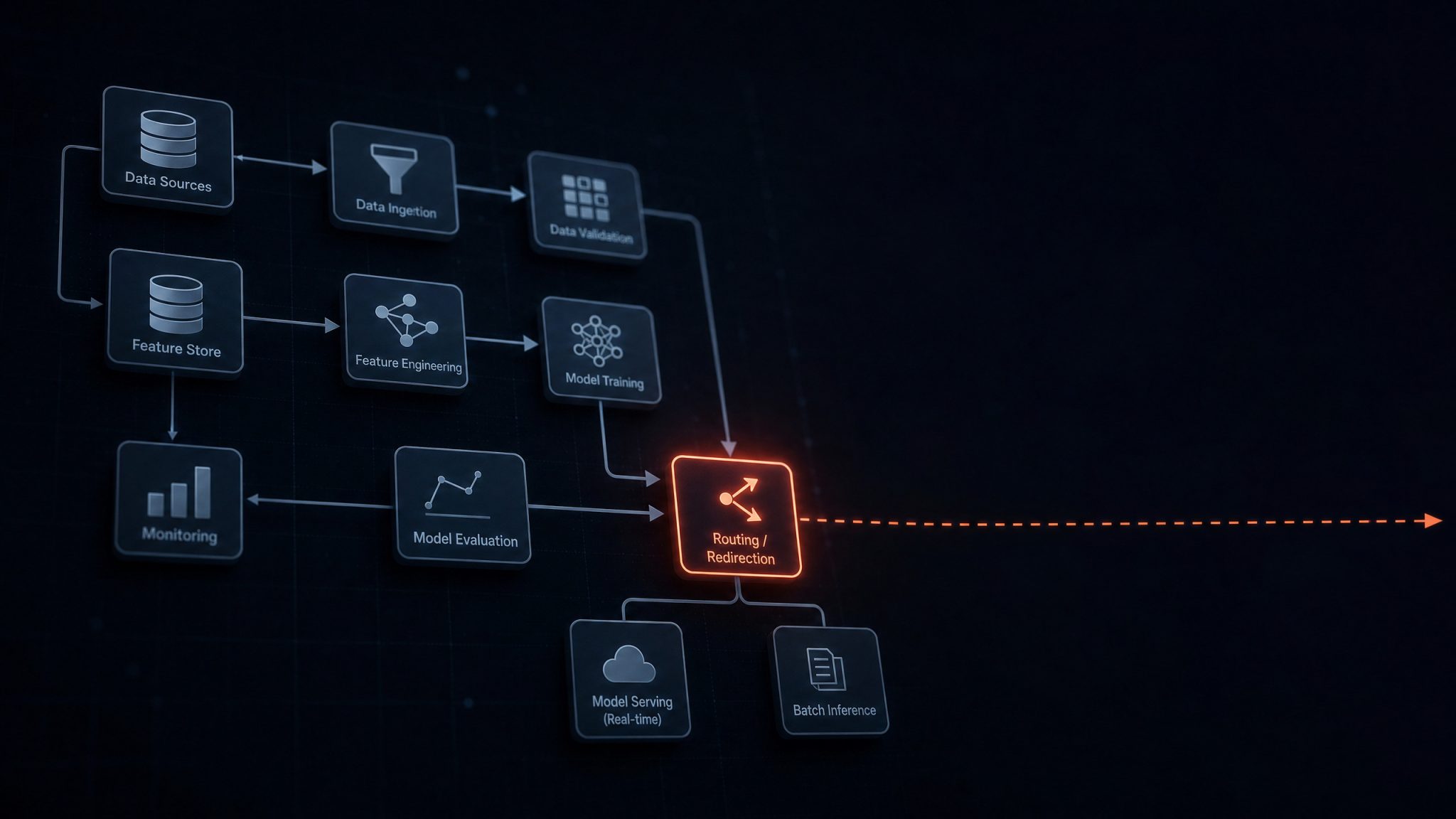
CVE-2026-64849 is a CVSS 9.3 SSRF in MLflow’s webhook endpoint that redirects server requests to cloud provider metadata APIs, enabling unauthenticated attackers to harvest IAM credentials. Exploitation was observed within hours of CVE assignment on August 17; CISA added the vulnerability to its KEV catalogue on August 19.
5) Cisco ASA and FTD CVE-2026-20349: One HTTP Request Crashes Both the Firewall and the VPN
Cisco confirmed active exploitation of CVE-2026-20349 on August 11, the same day CISA added the vulnerability to its Known Exploited Vulnerabilities catalogue. CVE-2026-20349 is a CVSS 8.6 denial-of-service vulnerability in the Remote Access SSL VPN service of Cisco Secure Firewall ASA and FTD software. The cause is insufficient error checking in the processing of incoming HTTP requests: an unauthenticated attacker with network access to the SSL VPN listener can send a single crafted request that causes the device to restart unexpectedly, with no credentials and no user interaction required. Affected configurations include SSL VPN, IKEv2 Remote Access VPN with Client Services, and Zero Trust Network Access deployments.
The operational consequence of CVE-2026-20349 is more significant than a standard denial-of-service finding because of what Cisco ASA and FTD appliances are: simultaneously the firewall enforcing the network security perimeter and the VPN concentrator providing remote access to the corporate network. A successful exploit removes both capabilities with a single request. Network segmentation collapses and every remote worker, site-to-site tunnel, and branch office VPN connection goes offline simultaneously. For organisations that consolidated remote access onto Cisco ASA or FTD hardware during the 2020–2022 period, CVE-2026-20349 means that a single unauthenticated HTTP request can produce a network outage equivalent to a site power failure. In the context of 2026’s threat landscape — where availability disruption has been documented as a deliberate tactic during ransomware negotiations and incident response operations — a targeted capability to crash the firewall and VPN on demand is not merely an inconvenience. It is a coordination tool that creates pressure exactly when defenders are most dependent on remote access to respond.
Apply the Cisco patch. Review firewall and VPN service logs for unexpected restart events from August 11 onwards that lack a corresponding maintenance window or hardware failure record. Assess whether the SSL VPN listener is directly internet-exposed without intermediate rate-limiting or IP-based access controls, and apply compensating controls if patching cannot be completed immediately.
Read more on: Cisco Security Advisory and BleepingComputer

CVE-2026-20349 allows an unauthenticated attacker to crash Cisco ASA and FTD appliances with a single HTTP request, simultaneously disabling both the network security perimeter and SSL VPN remote access. Cisco confirmed active exploitation on August 11 — the same day CISA added the vulnerability to its Known Exploited Vulnerabilities catalogue.
If Cybersecurity News Stories August 21, 2026 Has One Lesson, It’s This:
Five vulnerabilities across five product categories, all added to CISA’s Known Exploited Vulnerabilities catalogue within a single week. VMware’s virtualisation management plane. Microsoft’s on-premises collaboration platform. Apple’s macOS Screen Sharing service. The MLflow machine learning lifecycle platform. Cisco’s firewall and VPN appliance. Each is a different vendor, a different product team, and a different security discipline. What they share is not a technical similarity — it is a position in the organisation’s trust architecture. Each is an infrastructure component that defenders treat as foundational rather than as attack surface: something that manages other systems, provides access to other systems, or protects access to other systems. That position — rather than any particular weakness in code — is what makes them attractive targets.
The cross-layer distribution of this week’s active exploitation reflects the same systematic methodology that DIESEC has tracked throughout 2026. When one category of infrastructure gets hardened — edge devices, identity platforms, backup systems — targeting shifts to adjacent categories that have received less patching attention: AI and ML infrastructure maintained by data science teams, macOS fleets that run on a different patch cycle than Windows, on-premises collaboration platforms where July patches were deferred. None of these are exotic exposures. They are standard deployments in organisations that, by conventional patching and compliance metrics, would consider themselves reasonably maintained. This week’s lesson is that conventional metrics measure something narrower than the actual attack surface. The defensive question is not only which CVEs have been patched. It is which parts of the infrastructure stack have been treated as outside the patching mandate — and whether that assumption has been tested by anyone other than an attacker.
For more information, please contact us now!