
Top 5 Cybersecurity News Stories June 12, 2026
The five stories in this week’s Cybersecurity News Stories June 12, 2026 do not describe organisations that ignored known risks or failed to apply available controls. They describe organisations — and security architectures — whose valid assumptions have been invalidated by conditions that changed without obvious warning. A compliance control that certified “data at rest” protection until a researcher showed it could be bypassed with a USB drive and ten minutes of physical access. A backup platform turned into a ransomware pre-positioning target by any standard domain credential. A firewall compatibility mode preserved for legacy clients that a ransomware affiliate used for 32 days before a patch existed. An AI coding assistant’s automatic config file reading, turned into a credential-harvesting delivery mechanism. And a cost of vulnerability discovery — $1,000, one AI run, 21 zero-days — that changes the economics of systematic software research for any actor with API access. The week’s message is not about patching. It is about the lifespan of security assumptions.
1) Microsoft’s Record Patch Tuesday Fixes 200 Flaws — and Drops an Unpatched Zero-Day the Same Day
On June 9, 2026, Microsoft released its largest Patch Tuesday in the program’s 23-year history: 200 CVEs addressed in a single release, including 33 rated Critical. The most governance-significant fix is CVE-2026-50507, dubbed YellowKey: a BitLocker Security Feature Bypass vulnerability that allows an attacker with physical access and a crafted USB drive or EFI partition to boot into Windows Recovery Environment and access the contents of TPM-only encrypted drives without any additional credentials. The attack requires approximately ten minutes of unattended physical access to a device. Affected systems include Windows 11 and Windows Server 2022 and 2025 devices using TPM-only BitLocker mode. Exchange Server’s OWA cross-site scripting vulnerability CVE-2026-42897 — actively exploited since May 14 with only temporary mitigation available — receives its permanent fix. Hours after the release, security researcher Nightmare Eclipse published a full exploit for RoguePlanet, an unpatched local privilege escalation in Microsoft Defender that grants SYSTEM-level access on fully patched Windows 10 and 11 systems via a race condition, following a public breakdown in his relationship with Microsoft’s security response centre. No Microsoft patch or advisory for RoguePlanet was available as of June 11.
The BitLocker story is the governance story of the week for any organisation in a regulated sector. NIS2 Article 21(2)(h) and ISO 27001 A.8.24 both require protection of data at rest; BitLocker TPM-only mode is the most common implementation of that control on Windows laptops. YellowKey renders that control non-functional against any attacker with brief physical access — a scenario that encompasses office environments, hotel rooms, shared workspaces, and every context where a device leaves a physically controlled environment. The fix requires enabling TPM+PIN authentication, which is a configuration change that predates any patch and which Microsoft had previously recommended only as a more secure option. Many organisations have not made that change because it was optional. It is no longer optional if the TPM-only compliance certification is to remain valid. The RoguePlanet disclosure is a separate concern of a different kind: an unpatched SYSTEM-level exploit in Microsoft Defender, the endpoint protection tool running on virtually every managed Windows device, now has a publicly available proof-of-concept with no available remediation.
The same-day dynamic — record patch volume alongside an unpatched researcher full-disclosure — reveals two pressures converging. Microsoft is carrying a growing patching backlog: 200 CVEs in a single release is not evidence of improved security processes but of accumulated debt being discharged in a single wave, and the fact that Exchange CVE-2026-42897 required 25 days of temporary mitigation before a permanent fix was available reinforces that timeline. Simultaneously, the relationship between Microsoft and independent security researchers is producing adversarial disclosure timelines. Nightmare Eclipse has now published multiple full-disclosures following MSRC payment disputes. The 48-to-72-hour window before proof-of-concept exploits for newly patched Critical CVEs typically surface is now running concurrently with an unpatched zero-day from the same researcher.

Read more on: The Hacker News
2) Veeam CVE-2026-44963: Any Domain User Can Own the Backup Server
On June 9, 2026, watchTowr researcher Sina Kheirkhah disclosed CVE-2026-44963, a critical vulnerability carrying a CVSS v4 score of 9.4 in Veeam Backup & Replication that allows any authenticated domain user — no administrative privileges required, a standard Active Directory account is sufficient — to achieve remote code execution directly on the backup server. The flaw affects all version 12 builds up to and including 12.3.2.4465; the fix is version 12.3.2.4854, released the same day as the disclosure. Version 13.x is not affected due to architectural changes. The vulnerability applies only to domain-joined backup servers; workgroup configurations are not affected. Veeam confirmed no known exploitation in the wild as of the disclosure date, but noted that threat actors are likely to reverse-engineer the patch once it is released. Historical precedent is specific: CVE-2024-40711 was exploited by Akira and Fog ransomware groups within days of public disclosure; CVE-2023-27532 had a public proof-of-concept within approximately 48 hours.
Ransomware operators prioritise backup infrastructure in the reconnaissance phase because the backup server is the last line of recovery, and owning it before deploying ransomware removes the organisation’s ability to recover without negotiating. The attack chain enabled by CVE-2026-44963 is direct: obtain any domain credential — a standard corporate workstation account, a low-privilege service account, any valid Active Directory identity — reach the Veeam server on ports 9395 or 9399, achieve remote code execution, delete or corrupt backup data, then deploy ransomware. At that point, the organisation has no technical recovery path and the negotiating position shifts entirely to the attacker. Veeam holds approximately 70% of the enterprise backup market in Germany. Every SME and mid-market organisation in the DACH region running Veeam on a domain-joined backup server is affected until patched to 12.3.2.4854 or migrated to version 13.x.
The targeting of backup infrastructure by ransomware operators has now become precise enough that dedicated security research is focused on these platforms as entry points. The architectural response is backup server isolation: a dedicated network segment with no direct domain user access to management ports, separate administrative credentials not shared with the broader domain, and out-of-band management access that does not traverse the standard corporate network. Organisations that have not designed their backup infrastructure with adversarial access models in mind are carrying their last recovery option on the same network as the threat they are trying to recover from.

Read more on: The Hacker News
3) Check Point VPN Auth Bypass: Qilin Ransomware Was Inside the Network for 32 Days Before a Patch Existed
Check Point disclosed CVE-2026-50751 on June 8, 2026: a critical authentication bypass carrying a CVSS score of 9.3 in Check Point Remote Access VPN and Mobile Access solutions that allows an attacker to establish a full VPN tunnel without a valid password. The root cause is a logic flaw in certificate validation within the deprecated IKEv1 key exchange protocol. If a gateway accepts legacy Remote Access clients and does not require a machine certificate, the authentication bypass works entirely without credentials. CISA added CVE-2026-50751 to its Known Exploited Vulnerabilities catalog on June 8, 2026, with a federal remediation deadline of June 11. Confirmed exploitation began on May 7, 2026 — 32 days before the hotfix and public disclosure were available. At least one confirmed incident resulted in Qilin ransomware deployment with Rclone data exfiltration. A second vulnerability, CVE-2026-50752, affecting certificate validation in site-to-site VPN IKEv1 configurations, was identified during the investigation. Check Point’s Spark firewalls, specifically marketed to SMBs and MSP-managed customers, are among the affected products. The hotfix is available but protection requires completing six additional manual configuration steps to disable IKEv1 and switch to IKEv2-only operation — steps that are not part of the standard update workflow.
The 32-day exploitation window before a patch existed is the story, not the technical mechanism. Organisations running Check Point VPN with IKEv1 enabled had no available indication and no available mitigation for over a month while a Qilin affiliate used the bypass to enter their network. The requirement for manual reconfiguration beyond the hotfix mirrors the SonicWall Gen6 pattern from May 2026 and the FortiGate pattern from earlier in the year: the patch alone is not sufficient, and the administrators most likely to miss the additional steps are those in SMB environments managed by MSPs who apply updates but do not always audit the resulting configuration state. This is the seventh distinct edge device product line exploited in 2026, joining Cisco SD-WAN, Palo Alto PAN-OS, SonicWall, FortiGate, Ivanti, and Zyxel.
Seven exploited edge device vendors in six months is not a story about seven different products with poor security engineering. It is a pattern about a category: perimeter security hardware characterised by high-value positioning, complex configuration, legacy protocol support maintained for compatibility, and long exploitation windows before discovery. In each case the attack path ran through a compatibility feature that was added for legitimate operational reasons and never removed because something depended on it. Organisations that have not audited the legacy compatibility modes enabled in their perimeter devices — not just whether they are patched, but what protocols and authentication methods are active — are carrying attack surface they cannot see on any monitoring dashboard.

Read more on: BleepingComputer
4) Miasma Worm Compromises 73 Microsoft GitHub Repositories — Your AI Coding Assistant Was the Delivery Mechanism
On June 5 and 6, 2026, the Miasma supply chain worm compromised 73 repositories across four Microsoft GitHub organisations: Azure, Azure-Samples, Microsoft, and MicrosoftDocs. GitHub disabled access to all affected repositories within a 105-second detection window. Among the casualties were azure-functions-host, the entire Durable Task framework family, and azure-search-openai-demo — projects routinely cloned by enterprise development teams building on Microsoft’s Azure and AI platforms. The attack vector is not a package install hook or a dependency manager step. A malicious commit planted configuration files — targeting specifically .claude/settings.json, .vscode/tasks.json, and equivalent startup files for Gemini CLI and Cursor — that execute a credential-harvesting payload when a developer opens the repository in Claude Code, Gemini CLI, Cursor, or VS Code. No installation action is required; the AI coding assistant reads those configuration files automatically at startup. The payload harvests GitHub tokens, AWS, Azure, and GCP credentials, npm publish tokens, and developer secrets from the workstation. Miasma is assessed as a variant of the Mini Shai-Hulud supply chain worm toolkit, which TeamPCP published under the MIT license on May 12, 2026. The broader Miasma and Shai-Hulud campaign arc has now compromised 113 or more repositories across dozens of accounts. This is the 13th confirmed supply chain attack targeting developer infrastructure since January 2026.
The attack surface has shifted from packages to configuration files, and the delivery mechanism is the startup behaviour of the AI coding assistant. Prior supply chain attacks in 2026 targeted npm preinstall hooks, PyPI wheel artifacts, and Visual Studio Code extension publish pipelines — all of which required an explicit install action or dependency resolution step to trigger. Miasma requires none of these. Any developer who opened an affected repository in one of the listed tools triggered the payload. The credential types harvested represent the keys to software delivery infrastructure: the ability to push to repositories, publish packages, deploy to production cloud environments, and access internal development systems under legitimate-looking credentials. Organisations whose developers routinely clone or pull from public GitHub repositories — including widely used Azure development frameworks and AI integration samples — were exposed to this vector, and may remain exposed to it in any repositories not yet audited for malicious configuration file commits.
The supply chain worm ecosystem has matured across three generations in six months, each introducing new evasion techniques. Mini Shai-Hulud added SLSA provenance forgery; Miasma pivoted to AI coding agent configuration file injection; the Hades variant in PyPI splits loader and payload across sys.path to defeat static scanners. Each generation is derived from the same MIT-licensed toolkit, meaning any actor with the ability to clone a repository can deploy an updated version. Organisations that have built their supply chain security program around package integrity verification and dependency scanning have not modelled this attack class. Developer workstation security — specifically what files AI coding tools read automatically at startup, what credentials are accessible from the development environment, and which public repositories are routinely opened — is now a component of supply chain risk management.

Read more on: Dark Reading
5) $1,000 and One AI Agent: 21 Zero-Days in FFmpeg. The Economics of Vulnerability Research Have Changed.
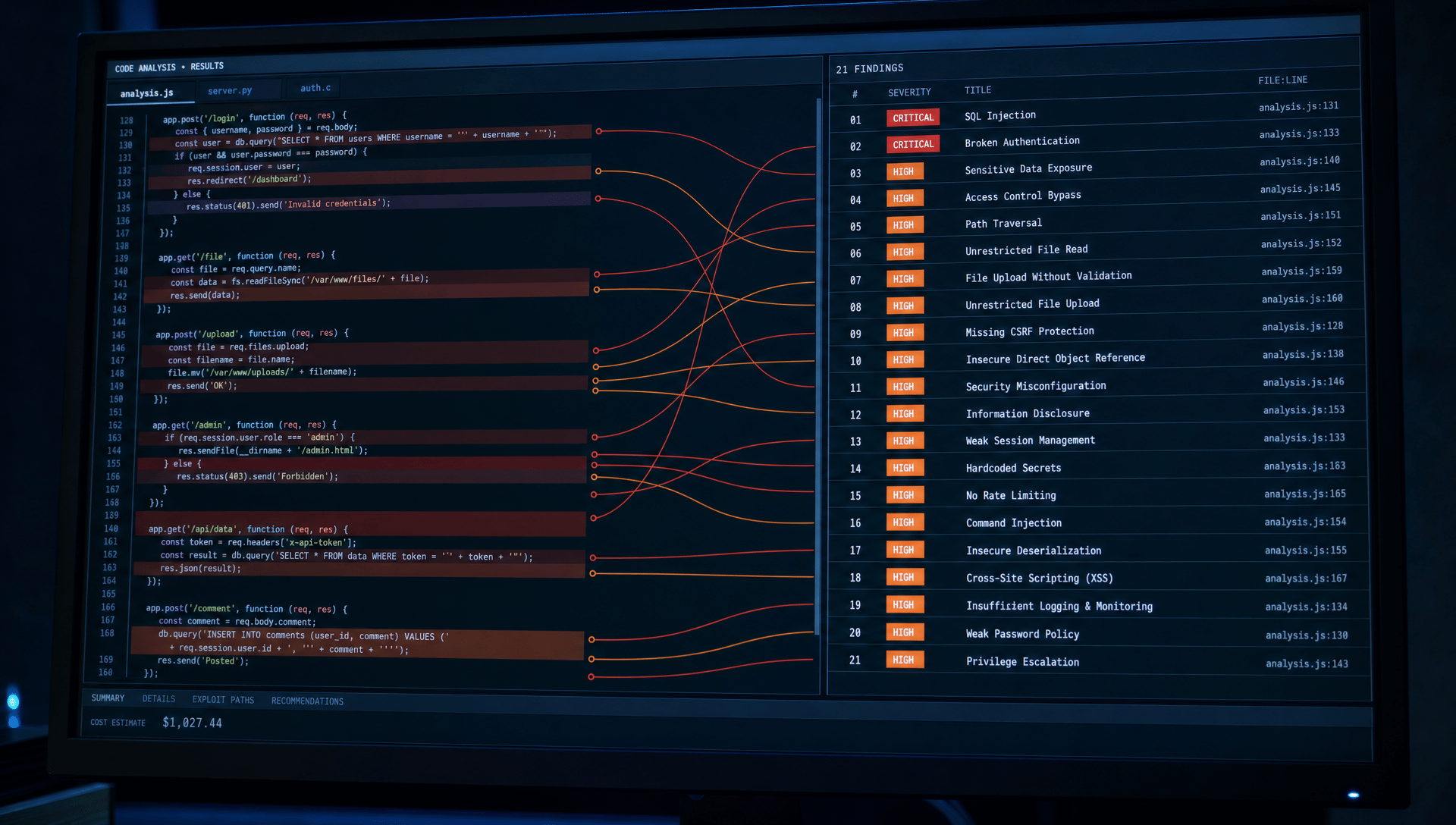
On June 6, 2026, security startup Depthfirst published the results of running its autonomous AI agent against FFmpeg’s approximately 1.5 million lines of C code. The agent produced 21 confirmed zero-day vulnerabilities, each with a reproducible proof-of-concept input, at a total compute cost of approximately $1,000. Several of the vulnerabilities had been latent in the codebase for between 15 and 23 years without prior discovery. Nine CVE identifiers have been assigned, numbered CVE-2026-39210 through CVE-2026-39218; the remainder are fixed but not yet numbered. The same week, Google released Chrome version 149 carrying 429 security vulnerability fixes — the largest single Chrome release in the browser’s history — after overhauling its bug bounty programme to manage an accelerating volume of AI-generated vulnerability reports. This is the third confirmed instance of autonomous AI-driven zero-day discovery in 2026, following Google’s Threat Intelligence Group documenting the first AI-generated zero-day in active exploitation in May and Anthropic’s Mythos model finding older FFmpeg vulnerabilities at approximately $10,000 per run. Depthfirst’s run reduces that cost by a factor of ten within weeks.
The $1,000 figure is the strategic data point. Human security researchers capable of finding new zero-days in a 1.5-million-line C codebase are scarce, expensive, and fully consumed by contracted work. That scarcity was historically the rate-limiting factor on how quickly any given piece of software could be systematically audited for unknown vulnerabilities. An autonomous AI agent operating at $1,000 per codebase removes that constraint for any actor with cloud API access and a documented open-source target. FFmpeg is embedded in virtually every video-handling application, streaming platform, content delivery infrastructure, and multimedia framework across the enterprise stack. The historical assumption underpinning most vulnerability management programmes — that the current CVE count for a mature, widely deployed codebase represents a reasonably complete picture of its known attack surface — does not survive a single $1,000 AI run producing 21 findings.
Vulnerability discovery is transitioning from a craft practised by expensive specialists to an automated research capability that scales with compute budget. The implication for vulnerability management is direct: patch prioritisation programmes, risk acceptance timelines, and exposure management cycles that were calibrated against the assumption that attacker research requires weeks of human expertise are structurally too slow for an environment where an AI agent can map an unknown attack surface in hours. Chrome patching 429 vulnerabilities in a single release is the downstream defensive response to AI-generated discovery volume — and it is not a sustainable operating model at scale. The question for organisations is not whether AI-assisted vulnerability research is real. It is whether their exposure management programmes have been recalibrated against an attacker research economics that no longer resembles the one those programmes were designed to operate within.
Read more on: The Hacker News
If this week tells us anything, it’s this:
The five stories in this week’s Cybersecurity News Stories June 12, 2026 share a structural feature that the technical detail of each incident tends to obscure. None of them describe attacks that bypassed security controls in unexpected ways. They describe attacks that operated through security assumptions that were valid when they were made and have since been invalidated by changed conditions. BitLocker TPM-only mode was correct compliance practice — until a researcher with a USB drive demonstrated it was not. Veeam backup servers were protected by internal network positioning — until any standard domain credential became sufficient to achieve remote code execution on them. Check Point’s IKEv1 compatibility mode was a routine accommodation for legacy clients — until a ransomware affiliate used it as an authentication-free entry point for 32 days. AI coding assistant configuration file autorun was a developer productivity feature — until a supply chain worm made it a credential-harvesting trigger. And systematic vulnerability discovery was rate-limited by the scarcity of expert researchers — until a $1,000 AI run changed the economics of that constraint.
The practical implication is not a longer patching checklist. It is a governance question about the review cycle for security assumptions. Compliance configurations, architectural boundary decisions, vendor default settings, and vulnerability management timelines are all built on models of what adversaries can and cannot do. When those models change — as they have in each of this week’s five incidents — the security programme built on them is partially invalidated, often without any visible indicator until active exploitation begins. Organisations that periodically audit whether the assumptions underlying their security architecture remain accurate against current threat conditions, rather than against the conditions that existed when the architecture was designed, are the ones most likely to close the gap before an attacker finds it.
For more information, please contact us now!