
Top 5 Cybersecurity News Stories May 08, 2026
This week’s Top 5 Cybersecurity News Stories May 08, 2026 are not a recap. They are a strategic read of where foundational trust is breaking down across the systems organisations have never had reason to question. These cybersecurity news stories for May 8 reveal pressure across five distinctly different layers: the perimeter firewall itself, the concentrated data infrastructure of the education sector, the legitimate software distribution channel, the shared tooling networks of state-sponsored espionage, and the institutional relationship between organised ransomware and the Russian state. The common thread is not technical complexity. It is the erosion of assumptions that organisations have built their risk models around — assumptions that the firewall is reliable, that the signed installer is clean, that the criminal and the state are separate actors. This week showed that none of those assumptions is as stable as it was.
1) Palo Alto PAN-OS: When the firewall becomes the breach path
Palo Alto Networks confirmed active exploitation of CVE-2026-0300, a buffer overflow in the PAN-OS User-ID Authentication Portal that allows unauthenticated attackers to execute arbitrary code with root privileges on internet-facing PA-Series and VM-Series firewalls. CISA added the vulnerability to its Known Exploited Vulnerabilities catalogue on May 6 with a federal remediation deadline of May 9. Palo Alto’s own patch is not due until May 13.

That four-day gap between the CISA compliance deadline and the available patch is more than a scheduling inconvenience. It surfaces a structural problem in how security governance operates under active exploitation: federal agencies are expected to remediate a flaw that cannot yet be patched, leaving configuration-based mitigation as the only lever. For organisations that have left the User-ID Authentication Portal exposed to the internet — not through negligence, but because that is frequently a deployment default — the window between disclosure and patch is now an active exploitation period. The CVSS score drops from 9.3 to 8.7 when access is restricted to trusted internal networks, which points directly to the mitigation: isolate the portal immediately.
The broader signal reinforces a pattern that has now appeared in four major security vendors this year. The most targeted layer is not the application estate, not user endpoints, and not cloud workloads. It is the perimeter security hardware organisations treat as the non-negotiable boundary. When that boundary is itself the attack path, every control downstream of it becomes contingent rather than absolute.
Read more on: The Hacker News
2) Instructure/Canvas: One breach, nine thousand institutions, one sector’s entire communication layer
ShinyHunters confirmed a breach of Instructure, the company behind Canvas, the learning management system used by more than 40 percent of US colleges and universities and thousands of institutions globally. The group claims to have exfiltrated 3.65 terabytes of data belonging to approximately 275 million users across nearly 9,000 institutions, including all eight Ivy League universities. The data includes names, email addresses, student identifiers, and reportedly billions of private messages exchanged between students and teachers. The extortion deadline passed on May 7.

The strategic issue here is not that a SaaS company was breached. It is what the breach reveals about sector-level data concentration. Canvas is not simply a course delivery tool. It is the primary communication and administrative infrastructure for a substantial portion of global higher education. When that platform fails, the damage is not confined to one organisation. It propagates across every institution that outsourced its communication infrastructure to a single vendor, simultaneously, without a failover.
The data type compounds this. Academic messages, attendance patterns, assignment history, and interpersonal communications between students and educators constitute context-rich intelligence that enables targeted fraud, credential attacks, and social engineering at a level of personalisation that a list of email addresses alone could never support. The sector has accepted the efficiency of consolidation without pricing the systemic exposure it creates. This week is the invoice.
Read more on: BleepingComputer
3) DAEMON Tools: Signed malware through the official front door
Kaspersky’s Securelist team disclosed that official DAEMON Tools Lite installers distributed through the vendor’s own website were compromised between April 8 and May 5, 2026 — twenty-seven days. The trojanised versions carried legitimate digital signatures and delivered a staged payload: an information stealer collecting system metadata, a persistent backdoor capable of remote command execution, and in at least one known case, a QUIC-based remote access trojan deployed against a specific target. Germany, France, and Spain were among the countries with confirmed infections. Approximately ten percent of infections occurred on corporate devices. Version 12.6, released May 5, removed the compromised components.
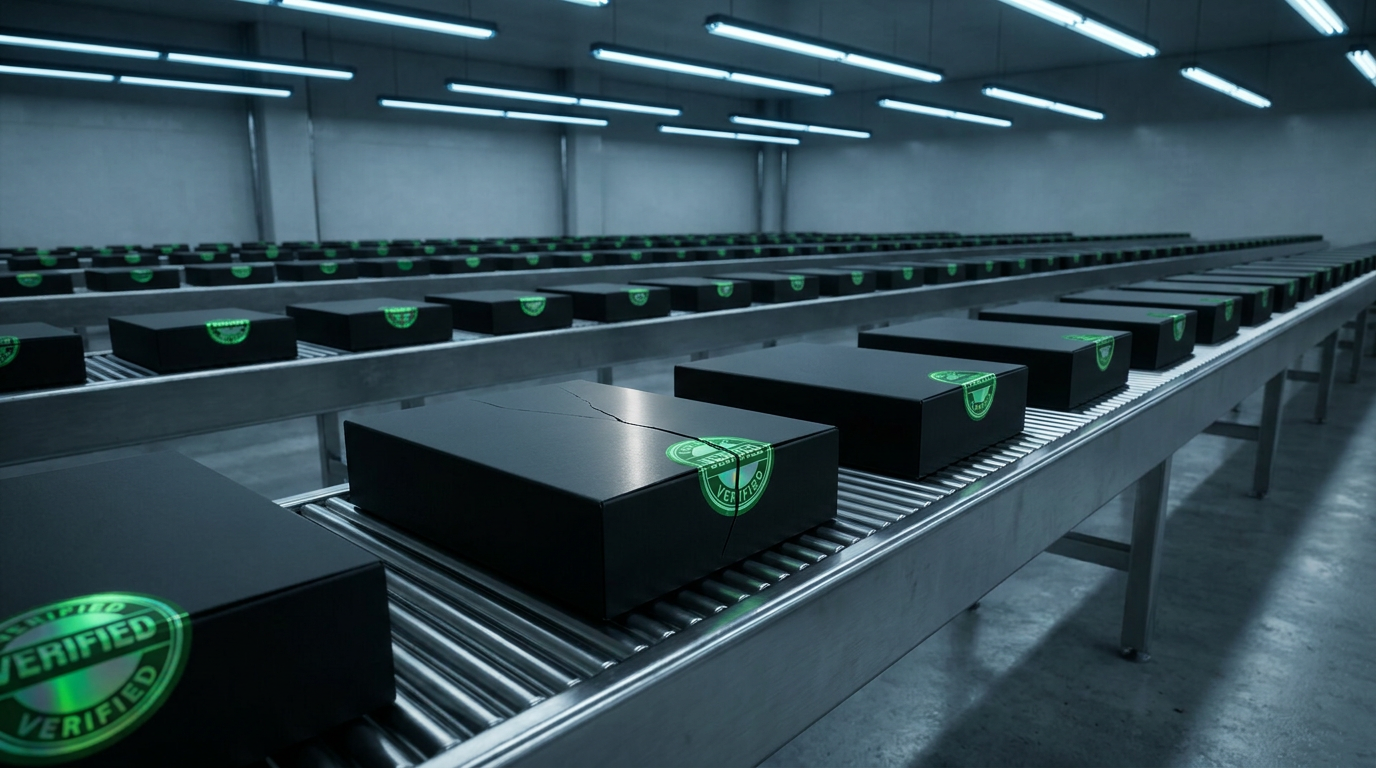
This attack is structurally different from the developer-tool package repository compromises that have defined supply chain risk in 2026. Those attacks target trust in the package ecosystem: npm, PyPI, GitHub Actions. DAEMON Tools represents a step further back in the chain — the vendor’s own distribution infrastructure was the compromised channel. A user downloading from the official website, checking for a valid digital signature, and trusting both was still at risk. Code signing is a signal of origin, not a guarantee of integrity if origin itself is compromised.
For organisations running DAEMON Tools on corporate endpoints — and given the ten percent corporate infection rate, many do — the question is no longer whether to patch. It is whether persistent access was established in the twenty-seven days the compromised installer was live, and whether that access has already been used.
Read more on: Kaspersky Securelist
4) UAT-8302: China’s shared espionage toolkit expands across three continents
Cisco Talos published research on May 5 attributing a sustained government espionage campaign to UAT-8302, a China-nexus cluster that has targeted government entities across South America since late 2024, southeastern Europe through 2025, and southeastern Asia through the current period. The group deploys a notable combination of custom malware families — NetDraft (a .NET backdoor also known as NosyDoor), CloudSorcerer, SNOWLIGHT, and Deed RAT — that have each been documented in association with multiple distinct China-aligned threat groups including Ink Dragon, Earth Alux, Earth Estries, and UNC5174. Initial access follows the same method used by the majority of sophisticated actors in 2026: exploitation of N-day and zero-day vulnerabilities in internet-facing web applications, VPNs, and firewall platforms.

The convergence of tooling across nominally separate Chinese threat clusters is the structural signal worth examining. When multiple distinct groups share custom malware, it implies centralised development and coordinated deployment — a model that makes attribution harder, containment more complex, and defensive signatures less durable. Organisations that have built detection based on attributing specific tools to specific actors will find the ground shifting as the same tools appear under different operational clusters.
For European organisations and government-adjacent entities in the DACH region, the campaign’s targeting of southeastern European governments is a relevant proximity signal. The attack methods — exploiting public-facing infrastructure, deploying low-footprint backdoors, using legitimate cloud services for command and control — are consistent with the broader pattern of China-linked intrusions that have increasingly targeted European diplomatic and industrial targets over the past eighteen months.
Read more on: The Hacker News
5) Conti, Karakurt, Akira: The US court that just showed why ransomware outlasts takedowns
The US Department of Justice sentenced Latvian national Deniss Zolotarjovs to 102 months in prison on May 4 for his role as a primary extortionist and negotiator in the organisation that operated under the Conti, Karakurt, Royal, TommyLeaks, SchoolBoys, and Akira ransomware brands. The sentencing documents revealed that the group co-opted Russian government law enforcement databases to intimidate and harass victims who refused to pay, to identify and evaluate potential new recruits, and to help its leadership avoid tax obligations and military conscription. Prosecutors stated that the gang’s connections to the Russian state allowed it to fuel institutional corruption within Russian law enforcement itself.

The multi-brand structure — Conti becoming Karakurt, then Royal, then Akira, with SchoolBoys running in parallel — is not the result of disorganisation. It is engineered resilience. Each brand change follows law enforcement pressure on the previous identity, allowing the same human network, the same technical infrastructure, and the same victim targeting methodology to continue under a new name. What the DOJ sentencing reveals is the layer that makes this possible: institutional access to state resources that insulates the organisation from both Western extradition pressure and domestic accountability.
This matters for defenders because it reframes the strategic question. The question is not whether Western criminal prosecution deters ransomware. It clearly has some impact. The question is whether it can structurally disrupt a criminal ecosystem that is embedded in, and protected by, state institutional infrastructure. The honest answer, which this week’s sentencing documents underscore, is that individual convictions are necessary but not sufficient to address a threat with state-adjacent operating conditions.
Read more on: TechCrunch
If this week tells us anything, it’s this:
The most consequential risk in 2026 is not the vulnerability that appears in the headlines. It is the systemic assumption that fails silently underneath it. This week’s five stories each revealed a different assumption under pressure: that firewalls protect rather than expose, that vendor-consolidated platforms distribute rather than concentrate risk, that signed software is safe software, that state-sponsored and criminal threat actors are meaningfully distinct, and that prosecution dismantles rather than displaces organised ransomware networks.
Organisations that price each of these as isolated technical incidents will continue to be surprised. Those that treat them as evidence that the foundations of their risk model — perimeter hardware, vendor trust, authentication infrastructure, geopolitical separation of criminals and states — are themselves variables rather than constants will be better positioned to respond to what comes next. The threat environment is not accelerating. It is deepening. And depth requires a different kind of governance than speed alone.
For more information, please contact us now!