
Top 5 Cybersecurity News Stories April 17, 2026
This week’s Top 5 Cybersecurity News Stories April 17, 2026 are not a recap, they are a strategic read of where risk is concentrating. This week highlights simultaneous stress across patching ecosystems, financial systems, AI‑driven vulnerability discovery, trusted SaaS integrations, and critical infrastructure. These signals point to quiet but compounding failures inside platforms many organisations still treat as stable, trusted, or purely operational. The common theme is compression. Multiple control layers are failing at once, faster than traditional governance, prioritisation, and response models can realistically absorb.
1) Patch Everything Week: When critical fixes collide across platforms
Microsoft released fixes for 167 vulnerabilities, including two zero‑days, one actively exploited in SharePoint Server. SAP disclosed a CVSS 9.9 SQL injection affecting BW/BPC. Adobe patched an Acrobat Reader zero‑day exploited for months. Fortinet confirmed active exploitation of a FortiClient EMS vulnerability affecting endpoint management servers. All surfaced within the same week.

Individually, each issue is manageable. Collectively, they expose a coordination failure. Mid‑market organisations often run several of these platforms simultaneously, owned by different teams with different priorities. Control planes, financial systems, and document workflows all required urgent attention at once, overwhelming linear “patch faster” models.
At a strategic level, this signals a shift from product risk to systems‑of‑systems risk. The failure mode is no longer ignorance, but overload. Organisations without risk‑based prioritisation across platforms will increasingly fail not because they ignore alerts, but because too many arrive simultaneously.
Read more on: Bleeping Computer
2) SAP BW/BPC: Attacks move from system compromise to numbers compromise
SAP disclosed CVE‑2026‑27681 (CVSS 9.9), allowing low‑privileged users to execute arbitrary SQL via upload functionality in SAP BW and BPC. The affected systems sit at the core of financial planning, consolidation, and management reporting.

This is not a classic availability incident. A compromise here impacts forecasts, consolidated figures, and audit‑relevant outputs. The damage is subtle, delayed, and organisationally toxic, especially where SAP finance systems bridge IT, finance leadership, and external reporting obligations.
The broader signal is a shift toward decision integrity attacks. As enterprise financial systems become more programmable and interconnected, attackers gain leverage not by shutting systems down, but by quietly undermining trust in the data leadership relies on to operate.
Read more on: SecurityWeek
3) Claude Mythos: AI collapses the cost of rediscovering old flaws
Anthropic demonstrated Claude Mythos autonomously discovering thousands of zero‑day vulnerabilities across major operating systems and browsers. Separately, researchers used AI assistance to identify a 13‑year‑old Apache ActiveMQ RCE within minutes.

The limiting factor in vulnerability discovery is no longer skill or time. Legacy components that survived unnoticed for a decade can now be rediscovered and weaponised cheaply, especially in environments with long software lifecycles and inherited infrastructure.
Strategically, this accelerates exposure decay. Systems once considered “unchanged and safe” become liabilities simply because AI has reduced the effort required to find and chain their weaknesses. Governance cycles are no longer aligned with discovery economics.
Read more on: The Hacker News
4) Rockstar & Snowflake: Authorized access becomes the breach
Reports indicate ShinyHunters accessed Rockstar Games’ Snowflake environment via a trusted third‑party analytics integration using stolen authentication tokens. No zero‑day was required, access was legitimate, persistent, and difficult to distinguish from normal service traffic.
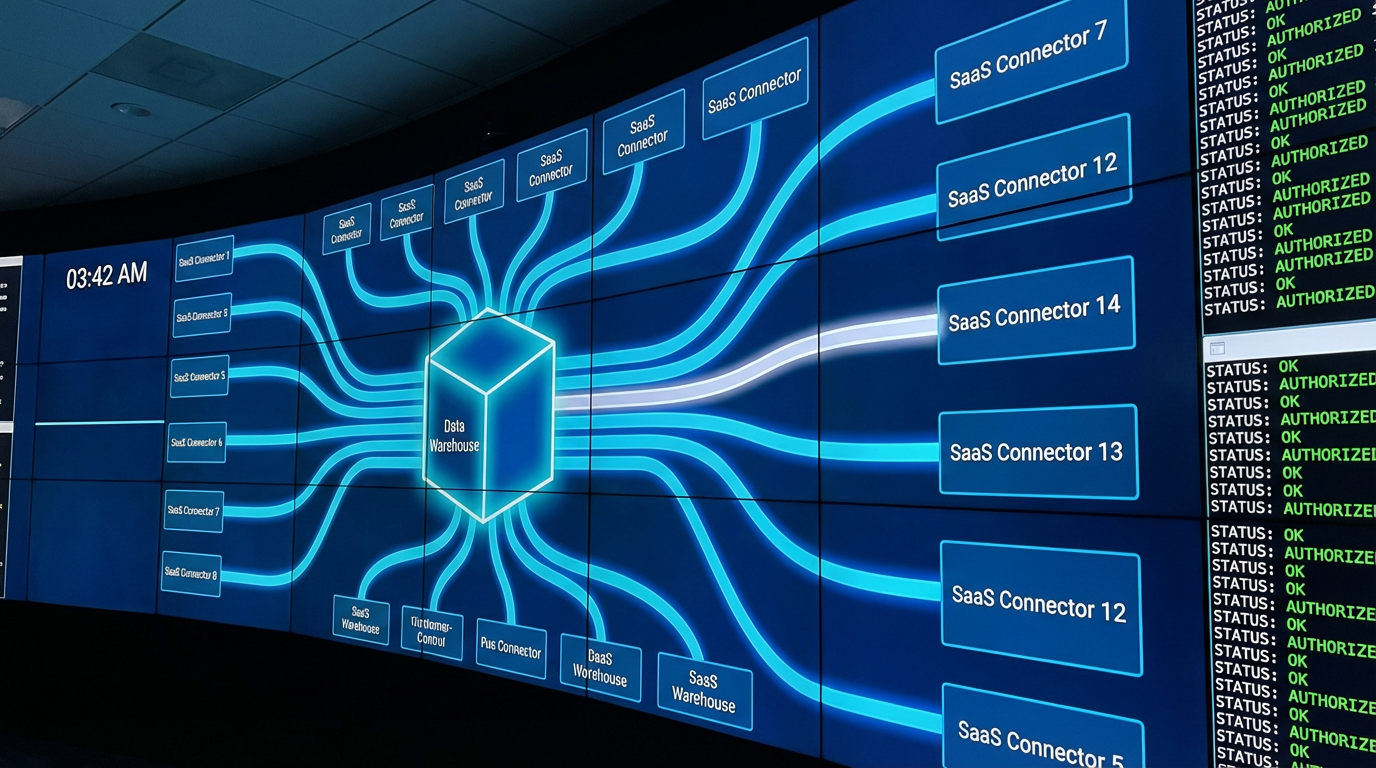
Modern enterprises rely on SaaS connectors that operate continuously with broad permissions. These integrations often bypass interactive security controls and appear benign in logs. When compromised, detection is delayed and containment becomes complex, both technically and organisationally.
This reinforces a growing pattern: supply chain risk is shifting from malicious code to authorised service identities. The most dangerous breaches increasingly arrive as valid access, not malware.
Read more on: Bleeping Computer
5) Sweden: Destructive OT attacks move from theory to attribution
Sweden publicly attributed a 2025 attempted destructive cyberattack on a thermal power plant to Russian‑linked actors. Authorities reported a shift from nuisance activity toward attempts at physical disruption, with similar incidents observed across Scandinavia.

Public attribution lowers the threshold for acknowledging cyber‑physical escalation. OT environments, long treated as isolated or safety‑buffered, are now overt geopolitical targets, particularly in energy and industrial sectors supporting national resilience.
The signal is clear: cyber‑physical risk is normalising as a state‑level pressure mechanism. For European operators, OT security is no longer just a safety discussion; it is inseparable from continuity planning and geopolitical reality.
Read more on: TechCrunch
If this week tells us anything, it’s this:
Risk is no longer accumulating at the perimeter. It is concentrating inside trusted systems: control planes, financial platforms, integrations, legacy components, and physical infrastructure. The common failure mode is not missing tools, but misplaced confidence in systems assumed to be stable by default. Organisations that continue to treat cybersecurity as isolated technical issues will struggle. Those that manage it as structural exposure across decision, data, and control layers will adapt faster and be less surprised by weeks like this one.
At DIESEC, our experts are ready to assist with all your cybersecurity needs. We ensure your system is safe and secure and provide training for your employees to avoid falling victim to social engineering tactics.
For more information, please contact us now!