
Top 5 Cybersecurity News Stories March 27, 2026
News Stories March 27 reveal a clear shift: compromise paths are moving into control planes,the systems that issue trust, ship code, govern identity, and manage fleets. This week wasn’t defined by “more breaches,” but by higher leverage. Attackers aren’t forcing doors; they’re operating inside the infrastructure behind them. When the control plane is compromised, every downstream security layer becomes negotiable.
1) Supply chain turns into a cascade (Trivy → Checkmarx → LiteLLM)
A supply-chain actor expanded from the Trivy CI/CD compromise into a hijacked Checkmarx GitHub Action and trojanized LiteLLM releases on PyPI.

This is not “one bad package.” It’s transitive compromise across developer tooling that sits upstream of production. The business exposure is broad: cloud credentials, CI/CD secrets, and Kubernetes access can be harvested silently, then reused across environments. The hardest part operationally is scope: you don’t just “remove the package,” you must assume credential compromise and map blast radius across pipelines and runtimes.
A single foothold in developer infrastructure is now a scalable distribution channel. Supply chain risk is shifting from vendor dependency to “toolchain trust collapse”, fast, repeatable, and compounding.
Read more on Wiz
2) Session theft returns to the edge (Citrix NetScaler CVE-2026-3055)
Citrix disclosed a critical out-of-bounds read in NetScaler ADC/Gateway that can leak active session tokens from memory, particularly in common SAML IdP configurations.

For executives, token theft is an identity failure mode, not a “patching” story. Stolen sessions bypass MFA and conditional access because the attacker rides existing trust. Organizations using NetScaler at the perimeter are exposed to account takeover at scale with limited forensic clarity, because the “login” can look legitimate. This hits governance and assurance: if sessions are the new keys, identity monitoring and incident response assumptions must change.
Edge appliances remain high-leverage identity infrastructure. The market is moving toward “identity is the perimeter,” but attackers keep targeting the machinery that issues and holds identity state.
Read more on RAPID7
3) Engineering systems are now front-line targets (PTC Windchill/FlexPLM CVE-2026-4681)
A critical deserialization RCE affecting PTC Windchill/FlexPLM triggered extraordinary urgency in Germany, with direct outreach to affected organizations amid patch uncertainty.
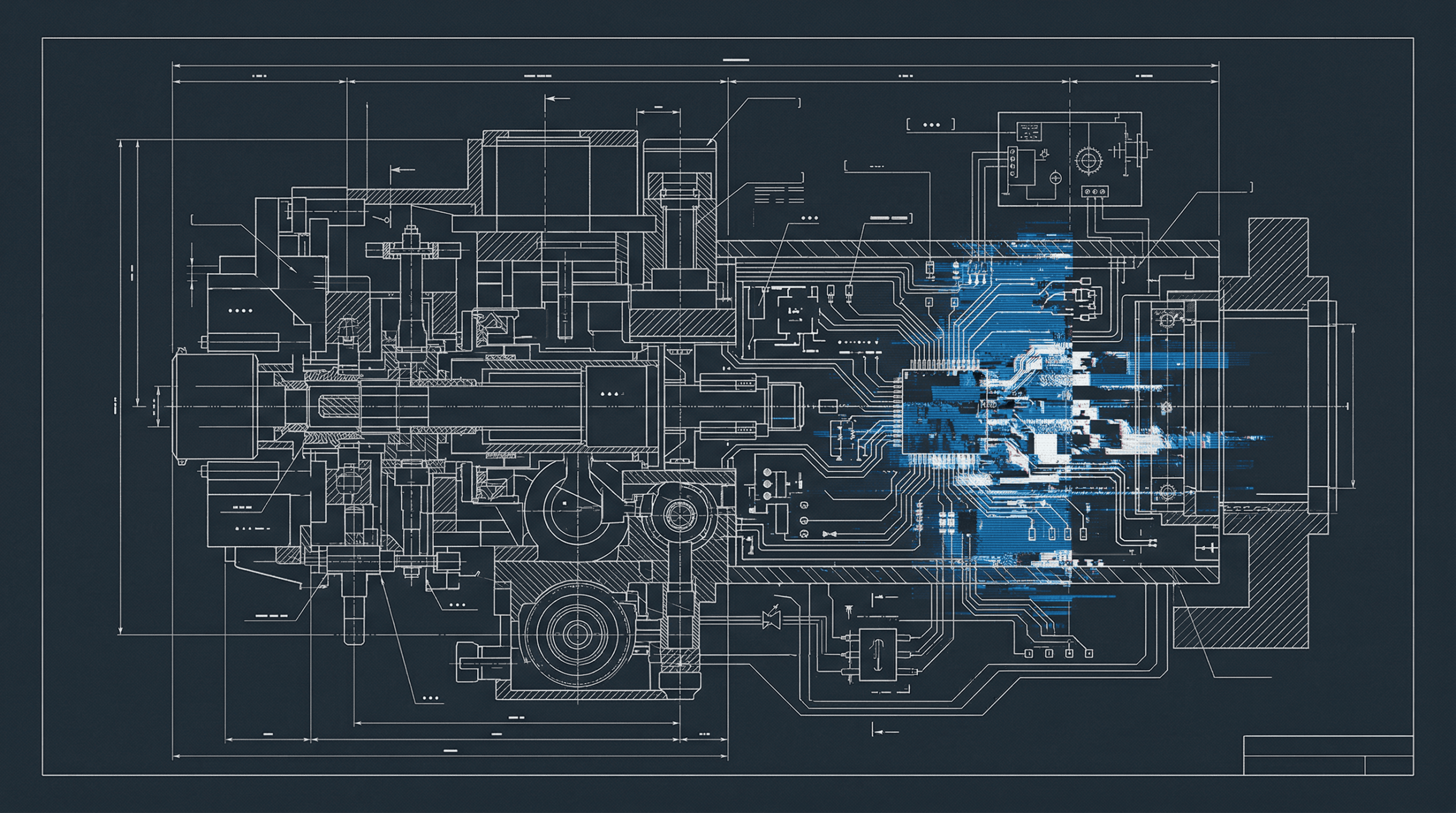
PLM platforms sit on crown-jewel IP: designs, BOMs, supplier data, and change histories. Compromise is not just data loss, it can enable downstream integrity risks (tampered designs, counterfeit parts, production disruption) and regulatory exposure in tightly governed supply chains. Many firms treat PLM as “industrial IT” outside standard security ownership, which creates a governance gap precisely where adversaries find maximum leverage.
Attack surface is expanding beyond classic IT/edge into cyber-physical business systems. Security maturity is now measured by whether organizations can protect the systems that define what they build, not only what they store.
Read more on heise online
4) Admin planes as weapons (Stryker Intune incident: containment + hardening guidance)
Stryker confirmed containment and ongoing restoration after an Intune-centered incident that wiped large numbers of devices; authorities also moved against related attacker infrastructure and hardening guidance followed.

This is a resilience and operating model issue: endpoint management is a force multiplier for IT, and for attackers. When the admin plane is compromised, attackers can create immediate, distributed business disruption without deploying traditional malware. The exposure layer here is “control over operations,” including BYOD impact, authentication disruption, and recovery complexity. It forces boards to treat identity + device management as business continuity infrastructure.
We are entering a phase where attackers prioritize orchestration systems (MDM/IdP/RMM) because they convert a single credential into enterprise-wide action at machine speed.
Read more on The Record
5) The management plane is the new breach plane (Cisco FMC zero-day exploited since January)
Threat intelligence indicates a ransomware group exploited a Cisco Secure Firewall Management Center zero-day since late January, weeks before public disclosure.

The risk is not only the vulnerability, it’s the time advantage. When exploitation precedes awareness, most organizations can’t defend with normal cycles (patch Tuesday, change windows, quarterly reviews). Management servers concentrate privileged control across many devices, so compromise scales laterally by design. This is an architectural concentration problem: the more centralized the control, the higher the blast radius when it fails.
Ransomware operations are maturing into “pre-positioning” campaigns against enterprise control hubs. Expect more attacks that target the systems that manage security, not the systems security is meant to protect.
Read more on AWS Blog
If this week tells us anything, it’s this:
Security risk is converging on control planes, toolchains, identity/session state, engineering platforms, device orchestration, and security management.
The strategic exposure isn’t a missing patch; it’s concentrated trust.
Organizations that can’t inventory and govern their control planes will keep experiencing “surprise impact,” because the attacker’s goal is no longer entry, it’s enterprise-scale leverage once inside.
At DIESEC, our experts are ready to assist with all your cybersecurity needs. We ensure your system is safe and secure and provide training for your employees to avoid falling victim to social engineering tactics.
For more information, please contact us now!