
Analyzing Norway’s Cyber Threat Landscape
Is Norway’s cyber threat landscape more exposed than ever? We have taken a deep dive into the cyber threats facing Norway and the sectors critical to its economy.

As Europe’s leading natural gas supplier and a global maritime powerhouse, Norway’s economy leans heavily on sectors that are increasingly attractive to both state-sponsored threat actors and cybercriminal groups. Recent years have seen targeted attacks on energy infrastructure, shipping networks, and even defense contractors.
What distinguishes the Norwegian cyber threat landscape is the convergence of critical infrastructure vulnerability, rising geopolitical tension, and a growing reliance on digitized operations in industries like offshore energy and logistics. From ransomware disrupting shipping ports to foreign adversaries probing the resilience of gas pipelines, Norway’s security posture is under mounting pressure. In this post, we explore the cyber threats facing Norwegian organizations.
Norway’s Cyber Threat Landscape
The Maritime Front
Norway’s vast coastline and maritime expertise have long underpinned its economic power. But today, that strength is increasingly under threat. The Nordic Maritime Cyber Resilience Centre (Norma Cyber) in Oslo has already tracked 239 disruptive cyber incidents targeting shipping systems, including the alarming possibility of remote ship hijackings or ballast system manipulation.

From onboard comms platforms and sensor firmware to shore-based logistics tools and satellite data brokers, small to mid-sized vendors often supply the maritime ecosystem with critical digital components. These businesses, whether they build APIs, maintain cloud platforms, or provide remote monitoring, can unknowingly become weak links in the security chain. And as maritime cyber threats escalate, particularly around espionage and sanction evasion, state-aligned attackers have a growing incentive to target less-defended SMBs that support larger shipping firms or port infrastructure.
Critical Infrastructure & Public Sector Threats
As a digitally advanced nation with high levels of public trust, Norway is an attractive target for the types of threat actors who like to bring down critical infrastructure and public-facing services. A single weak link can open doors to systems that manage water flow, control energy grids, or coordinate public services, as was seen in two recent attacks.
-
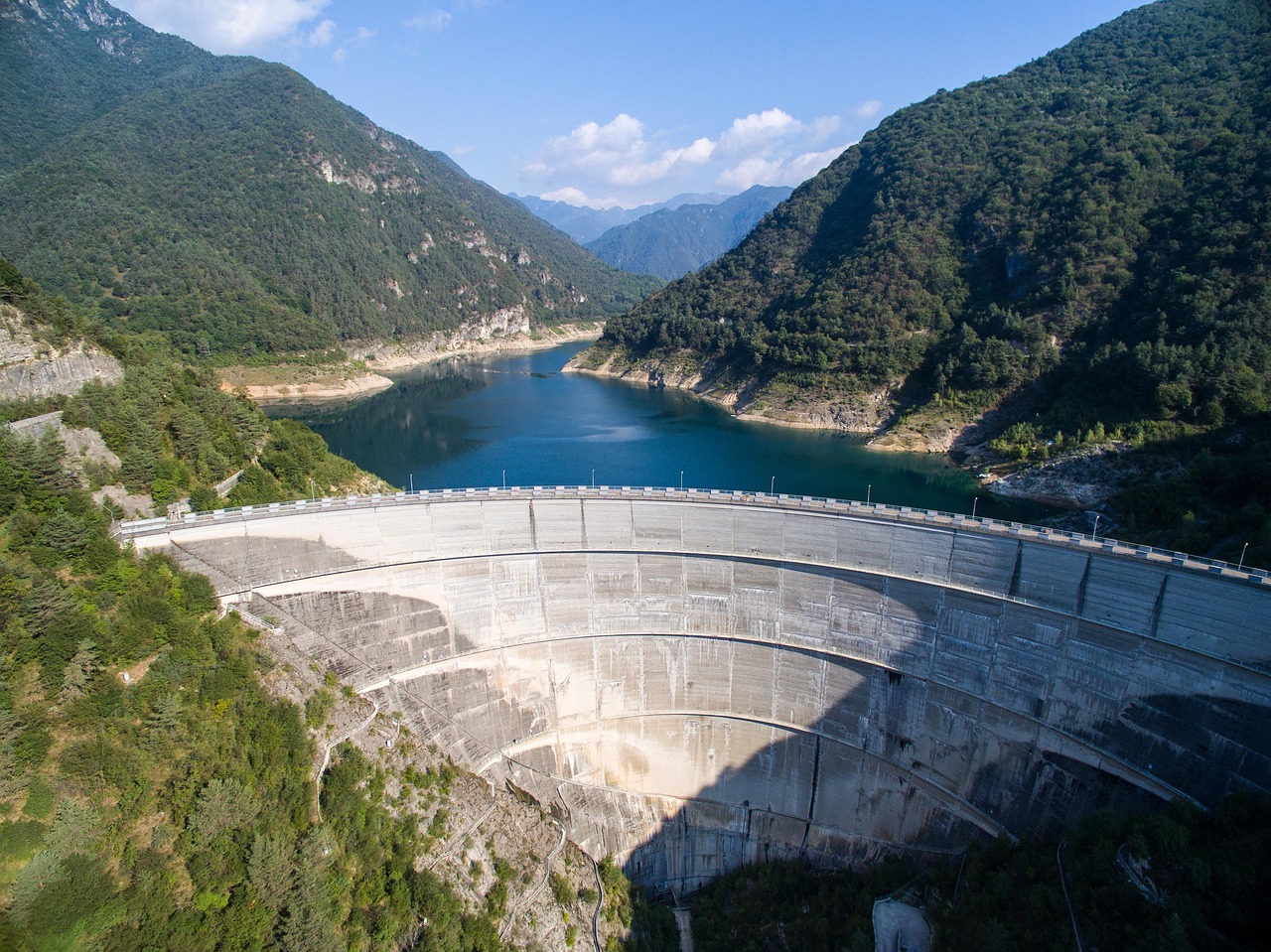
The Lake Risevatnet Dam Incident
In April 2025, attackers easily breached a web-accessible control panel of the Lake Risevatnet dam using nothing more than a weak password. Then, they remotely opened a discharge valve for four hours, increasing water flow by 497 liters per second. Although the riverbed could withstand up to 20,000 liters per second, the incident revealed how simple oversights in OT security like poor authentication, unsegmented access, or exposed HMIs, can bring national infrastructure to the brink.
-
The Ministries’ Platform Breach
Back in 2023, a cyber attack affected a shared IT platform used by 12 Norwegian government ministries, not including offices like Defense and Foreign Affairs. These ministries suffered a breach due to a vulnerability in that supplier’s IT platform. Although operations weren’t disrupted, the incident underlined how third-party or shared dependencies among public sector entities can become cascading attack vectors when not protected by rigorous vendor risk practices.
Norwegian SMBs’ Cyber Threats
While media coverage often focuses on major institutions and critical infrastructure, the reality is that small and medium-sized businesses (SMBs) form the connective tissue of Norway’s digital ecosystem. They often build the software, manage the systems, and supply the components that larger entities depend on, which makes them a powerful vector for upstream compromise.

Cyber attackers know this. SMBs are rarely targeted for their data alone, but for their access. Whether it’s an IT services firm plugged into municipal networks or a subcontractor providing code to a maritime logistics platform, an underprotected SMB can be the first domino in a much larger breach.
But that’s just one side of the coin. These SMBs also face threats from cyber actors searching for low-hanging fruit. A recent survey about cybersecurity in Norwegian SMBs pinpointed some interesting results:
- 5% of Norwegian SMBs do not use any formal information security management framework.
- Nearly 30% of surveyed organizations had already experienced a data breach.
In an age of automated reconnaissance, credential stuffing, and malware-as-a-service, you don’t have to be important to be attacked.
While Norway prides itself on digital maturity, its regulatory posture tells a different story. According to reporting by Digi.no, the country is still in the process of implementing its version of the EU’s NIS1 directive from 2016. Yet even this legislation remains in limbo, with no concrete enforcement timeline.

This delay matters. NIS2, the far more comprehensive successor to NIS1, has already been adopted by the EU. It significantly widens the net of covered entities, introduces stricter incident reporting rules, and places legal accountability on leadership. Norway, meanwhile, is regulating yesterday’s threats.
Boosting Norwegian Cybersecurity
It’s clear that Norway’s cyber threat landscape is evolving faster than its defenses. From critical infrastructure to government ministries and SMBs, the risks are diverse, but increasingly interconnected. As regulation lags, attackers move with speed, precision, and automation, targeting the weakest links in supply chains and exploiting gaps in preparedness. In this context, security can no longer be a patchwork of point solutions and reactive audits.
That’s where DIESEC steps in. Powered by our partnership with the Coro platform, DIESEC delivers a unified, automated security stack built for smaller organizations without full-time security teams. From endpoint protection and email security to identity, cloud, and data loss prevention, all monitored and managed from one place, Coro helps Norwegian SMBs gain the kind of security maturity attackers don’t expect from smaller targets.
It’s time to move from fragmented defenses to smart, consolidated protection. DIESEC helps you get there.