An Analysis of Sweden’s Cyber Threat Landscape
The Nordics are often grouped as a single, digitally advanced bloc. And while it’s true that Sweden, Denmark, Norway, Finland, and Iceland share a deep commitment to digital transformation, that surface-level unity masks a more nuanced truth: each country faces a distinct threat landscape shaped by its economy, public sector exposure, and geopolitical posture.
An Analysis of Sweden’s Cyber Threat Landscape
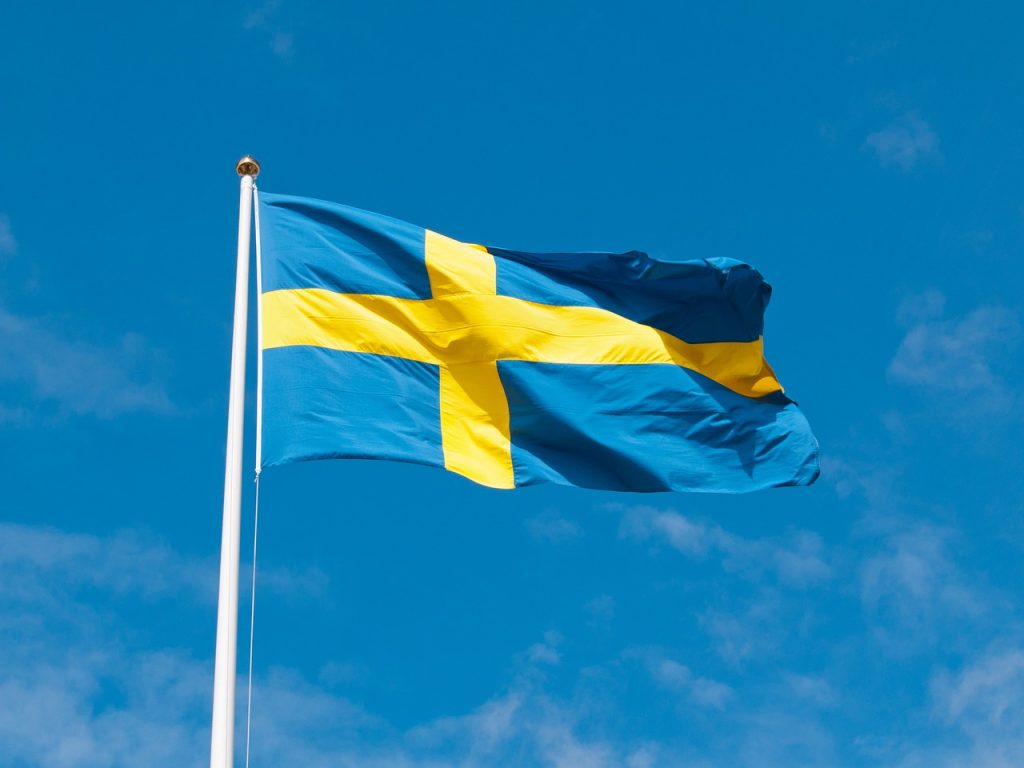
Take Sweden. With one of the world’s most mature digital infrastructures, Sweden has been a pioneer in cloud adoption, smart government services, and industry-wide automation. But that same digital depth creates risk density. A growing attack surface spans Swedish public institutions, manufacturing giants, and small businesses alike.
Sweden’s recent entry into NATO has only sharpened that risk, drawing increased attention from nation-state actors intent on probing national resilience and disrupting critical services. This blog is the first in a series unpacking the unique cyber risk profiles of the Nordic countries. The article takes a deep dive into Sweden’s cyber threat landscape.
Sweden’s Cyber Threat Landscape
In mid-2025, Prime Minister Ulf Kristersson acknowledged the scale of cyber threats facing Sweden, stating that Sweden is “under attack” following sustained DDoS campaigns that disrupted SVT, national banks, and identity services like BankID. While attribution remains unofficial, the Swedish Security Service has consistently named Russia, China, and Iran as primary actors conducting cyber operations against Swedish infrastructure.
But Sweden’s exposure isn’t limited to nation-state activity. The private sector has also become a soft target. Insurer Trygg-Hansa was fined $3 million by the Swedish Authority for Privacy Protection (IMY) after researchers found its quote system allowed access to sensitive personal data simply by altering digits in a URL, no authentication required. The breach illustrates a broader issue, which is that many Swedish companies underestimate the exploitation potential of insecure-by-design web applications and weak access controls.

A recent report from Zscaler, alluded to on Swedish website Computer Sweden, paints an interesting picture: 70% of Swedish organizations have either experienced or expect a security incident in the next six months, more than double the rate of countries like Japan and France.
The root cause may be cultural. Sweden’s longstanding consensus-driven approach and decentralized IT decision-making have created complex, distributed environments that resist rapid security transformation.
This organizational inertia stands in stark contrast to the pace of threat actors, who “don’t wait for internal decisions,” as ZScaler CISO Sebastian Kemi puts it. The result is a widening gap between threat velocity and defensive readiness.
Another recent study from GlobalConnect finds that Swedish IT leaders report the lowest perceived readiness in the Nordics. Just 7% of Swedish IT managers feel they have sufficient resources to future-proof their environments, and trust in executive leadership’s cybersecurity understanding lags significantly behind neighboring countries.

One of the most striking recent incidents involved Sportadmin, a widely used digital platform for managing memberships across Sweden’s amateur sports clubs. In early 2025, the personal data of an estimated two million Swedes, including 3,500 individuals with protected identities, was stolen and later published on the darknet. The breach triggered an investigation by Sweden’s Data Protection Authority (IMY) into whether Sportadmin had sufficient technical and organizational safeguards in place.
Even seemingly low-risk sectors can become conduits for massive privacy violations. In Sweden’s digitally advanced society, where everything from youth sports to insurance and banking is online, third-party platforms increasingly carry the blast radius of an attack.
The challenge for Sweden goes beyond traditional attack vectors. It’s also in how underprepared organizations are for the next generation of threats. According to a new survey from Cisco, 84% of Swedish organizations experienced an AI-related cyber incident last year, yet they lag behind the rest of Europe in adopting AI-based security solutions. Only 35% of Swedish security teams feel confident their employees understand AI-related threats, despite the increasing accessibility of tools that enable deepfakes, synthetic media, and AI-generated phishing content.

This is especially concerning given Sweden’s high digital dependence and open business culture, which create ideal conditions for social engineering and identity-based attacks. As generative AI lowers the barrier to producing convincing impersonations and payloads, attackers just need access to scalable, publicly available tools. In such an environment, traditional awareness training is insufficient unless it evolves to simulate realistic, AI-powered attack scenarios that staff and security teams must actively respond to.
Threats Amplified at Swedish SMEs
A 2025 survey from insurer If reveals that 28% of Swedish micro and small businesses see cyberattacks as one of their top business threats, yet nearly half haven’t taken any steps to improve IT security in the past two years.
This contradiction reflects a dangerous blind spot. Sweden’s SMEs are increasingly IT-dependent, particularly in sectors like e-commerce and logistics, where operations can grind to a halt following a successful attack. Many still rely on outdated measures like antivirus software or firewalls as their primary line of defense.

Worse, only 4% of SMEs have delivered cybersecurity training to staff, despite the well-documented role of human error in successful attacks. This is especially troubling given the rise of phishing-as-a-service platforms and AI-generated lures, which are increasingly indistinguishable from legitimate correspondence.
Most SMEs lack dedicated cybersecurity teams, and many don’t know where to begin. What they need isn’t another complex stack of disconnected tools, but a streamlined, unified security solution that doesn’t require deep expertise to operate. Something that automates key protections, blocks common threats before they escalate, and fits the reality of a small business: tight budgets, limited staff, and no room for downtime.
How DIESEC Bolsters Swedish SME Cybersecurity
Swedish SMBs face a perfect storm: rising threat levels, complex IT sprawl, limited internal resources, and growing reliance on third-party platforms. From large-scale breaches like Sportadmin to underinvestment in AI threat readiness and low staff training rates, the risks and associated threats are evident.
Through our partnership with the Coro platform, SMEs get simplified, centralized security across email, cloud apps, endpoints, and devices, without needing a full in-house SOC. And for deeper resilience, DIESEC’s penetration testing services simulate real-world attacker behavior, uncovering vulnerabilities before threat actors do. Together, these solutions provide Swedish businesses with the practical, right-sized security posture they’ve been lacking: