
Top 5 Cybersecurity News Stories August 28, 2026
This week’s Cybersecurity News Stories August 28, 2026 arrives with a pattern that cuts across every story: the infrastructure that organisations designate as trusted — the identity service that decides who gets access, the security tool that watches for threats, the developer pipeline that builds and deploys code, the video conferencing platform that carries internal conversations, the industrial controllers that translate digital commands into physical outcomes — was, in each case, the component under attack. Not as collateral damage. As the primary objective. The selection logic is not technical. It is architectural. Attackers who understand that foundational infrastructure receives less adversarial scrutiny than the assets it protects have been applying that understanding systematically throughout 2026. Five different exposure layers this week, five different vendors, one consistent approach: find the thing the organisation trusts most, and exploit the assumption that trust implies security.
1) Microsoft Entra ID CVE-2026-69836: CVSS 10.0 RCE in the Identity Backbone — and No Patch for You to Apply
Microsoft disclosed CVE-2026-69836 on August 20, 2026 — a deserialization vulnerability in Microsoft Entra ID (formerly Azure Active Directory) that allows an unauthenticated attacker to execute arbitrary code against the identity service with no account, no password, and no user interaction required. The CVSS score is 10.0. Because Entra ID is a fully managed cloud service, Microsoft fixed the vulnerability server-side before disclosure, meaning no KB article, no patch to install, and no configuration change exists for customers to apply or verify.
Normally, a vendor-side fix before disclosure is reassuring. CVE-2026-69836 surfaces a structural problem with that reassurance that has no clean resolution. When a cloud provider patches a CVSS 10.0 vulnerability in the managed identity service that authenticates every user in an enterprise environment, the customer has no mechanism to verify that the remediation was effective or that exploitation did not occur during the exposure window. There is no patch version to check, no audit log of remediation steps, no configuration state to confirm. For compliance purposes — particularly under NIS2 Article 21 requirements for organisations in scope — the question is not whether Microsoft fixed it. It is whether an organisation can demonstrate, to an auditor, that its identity backbone was not compromised between when exploitation was possible and when Microsoft confirmed the fix.
This is not an isolated edge case. It is a preview of a governance subcategory that will grow as identity, collaboration, and security infrastructure increasingly shifts to cloud-managed services: vulnerabilities where responsibility for fix verification falls entirely on the vendor, and where the customer’s only available response is log review and vendor trust calibration.
Read more on: Microsoft MSRC and SecurityWeek
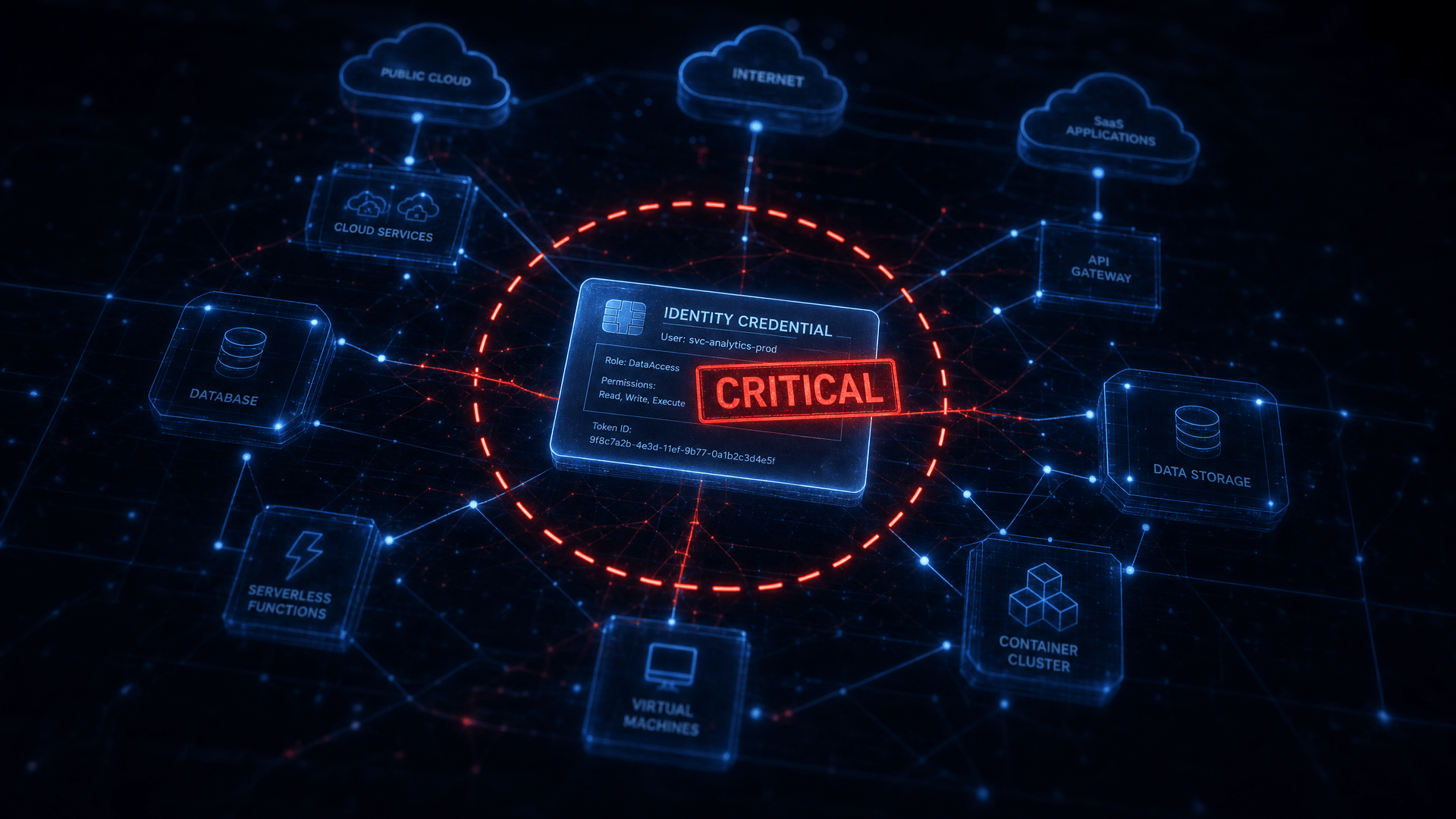
CVE-2026-69836 is a CVSS 10.0 deserialization vulnerability in Microsoft Entra ID that allows unauthenticated remote code execution against the cloud identity service with no credentials and no user interaction required. Microsoft fixed the vulnerability server-side before disclosure; no patch exists for customers to install or verify.
2) Siemens S7 PLCs: AI-Generated Exploit Scripts Are Now Targeting Industrial Controllers in Water, Energy, and Manufacturing
On August 19, the NSA, CISA, FBI, Department of Energy, and EPA issued joint advisory AA26-231A — one of the most significant OT security warnings issued by US federal agencies in 2026. Threat actors are combining publicly available industrial automation libraries, specifically snap7.dll and python-snap7, with AI-assisted scripting to produce custom exploitation tools that mimic legitimate OT monitoring software in traffic analysis. Scanning services including Censys and ZoomEye are used to identify internet-exposed Siemens S7 Series PLCs. The agencies confirm that actors have achieved read and write access to PLC memory, configuration data, and ladder logic. Targeted sectors include water and wastewater, energy, critical manufacturing, chemical, food and agriculture, and commercial facilities. The agencies describe the threat as active, not theoretical.
The significance of AI-assisted scripting in this context goes beyond the specific campaign. Understanding and exploiting the S7comm protocol, working with PLC addressing schemes, and crafting commands that modify ladder logic have, until recently, required deep specialisation in operational technology. AI-generated scripting materially lowers that knowledge threshold. An attacker with IT network exploitation experience and Python scripting skills can now generate functional OT attack tooling without OT-specific training. The advisory notes read and write access — meaning threat actors can not only observe physical process parameters but modify them. The agencies document this as capability development and persistent reconnaissance rather than confirmed operational effects, but the distinction between reconnaissance and disruption is one configuration change in ladder logic.
The boundary between IT and OT security has been dissolving architecturally for years, as operational technology connects to IT networks. CVE-2026-AI-advisory establishes that it is now dissolving from the attacker’s side as well: IT-oriented attackers can generate OT-capable exploit tooling. Every organisation with internet-exposed industrial equipment needs to treat ICS asset discovery and network segmentation as immediate priorities.
Read more on: CISA Advisory AA26-231A and BleepingComputer
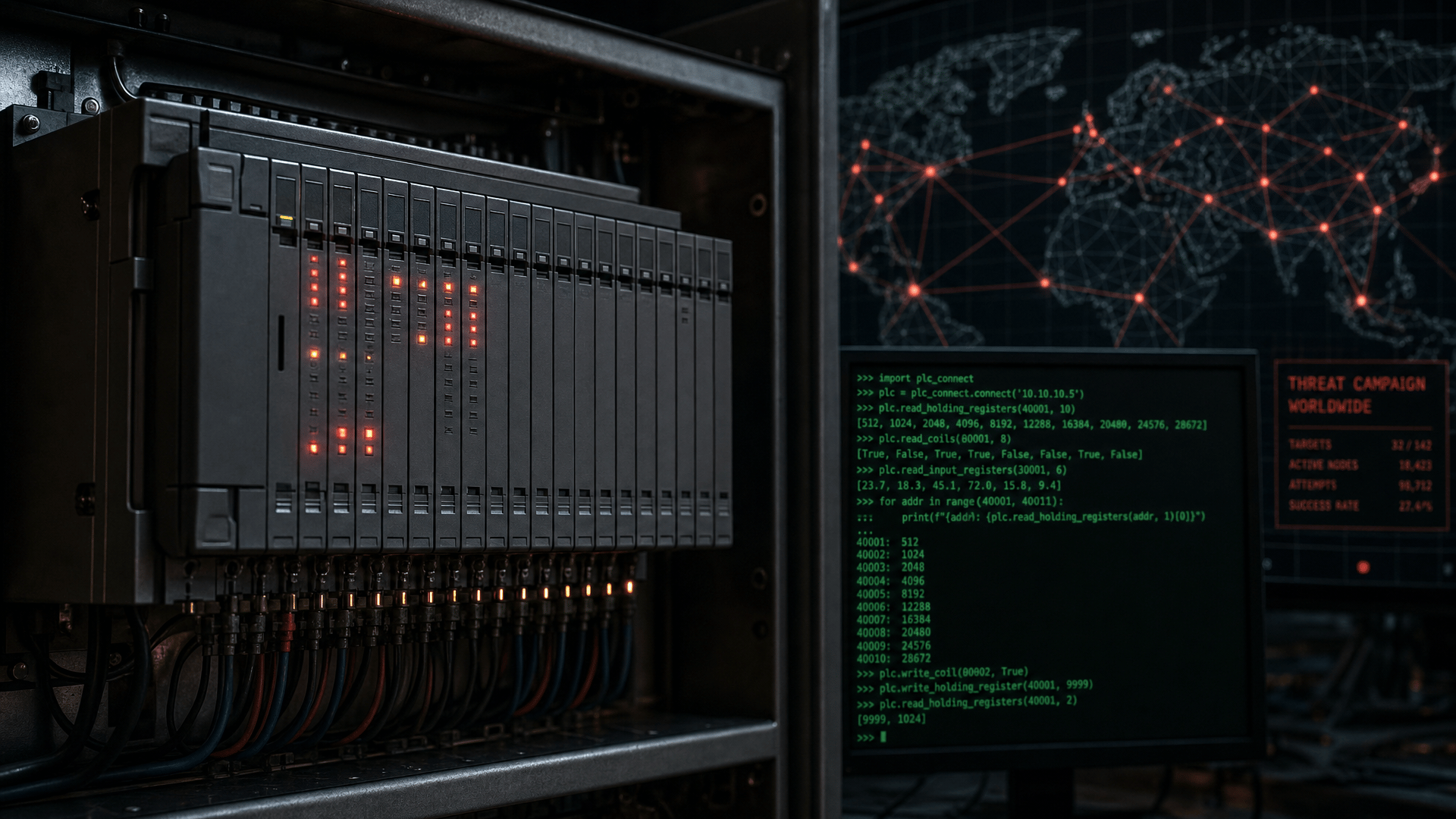
CISA Advisory AA26-231A documents an active campaign in which threat actors combine publicly available industrial automation libraries with AI-generated scripting to target internet-exposed Siemens S7 Series PLCs across water, energy, and critical manufacturing sectors. The authoring agencies — NSA, CISA, FBI, DOE, and EPA — confirm that attackers have achieved read and write access to PLC memory and ladder logic.
3) GitLab CVE-2026-19478: Unauthenticated Code Injection in Developer Infrastructure — Exploitation Measured in Minutes
On August 17, GitLab released an out-of-band security patch for CVE-2026-19478, an unauthenticated code injection vulnerability via a GraphQL directive affecting Community Edition and Enterprise Edition versions 18.2 through 19.2. The vulnerability requires no credentials and no user interaction: a single crafted HTTP request is sufficient to delete or modify public projects, forge merge records, or escalate privileges on a self-hosted GitLab instance. Fixed versions are 19.2.4, 19.1.6, 19.0.8, and 18.11.11. watchTowr researchers reproduced the exploit and subsequently observed real-world attacks in their honeypot infrastructure within minutes of the security release being published. GitLab.com and Dedicated instances are not affected; only self-managed deployments are at risk.
The exploitation timeline is the structural issue this story surfaces. The cybersecurity industry has broadly internalised that critical vulnerabilities are exploited within days of disclosure. CVE-2026-19478 compresses that window to minutes — a timeframe within which no human-operated patch management process can meaningfully respond. The mechanism is AI-assisted exploit reproduction: researchers and attackers alike use AI tools to translate a vendor advisory and patch diff into a working proof-of-concept faster than most organisations can even process the advisory notification. A compromised self-hosted GitLab instance is not an inconvenience to a development team. It is the repository for every line of code the organisation ships, the pipeline credentials that deploy to production, the signing keys that vouch for software integrity, and the CI/CD configuration that defines how every application is built. A GitLab compromise in 2026 is a supply chain compromise in progress.
CVE-2026-19478 is the fifth entry in a pattern DIESEC has documented across 2026: self-hosted developer infrastructure — Git services, CI/CD systems, build pipelines — has become a sustained priority target. The exploitation speed documented here establishes a clear operational requirement: these platforms need patch priority treatment equivalent to public-facing web applications, not the softer timeline often applied to internal developer tooling.
Read more on: GitLab Security Release and The Hacker News
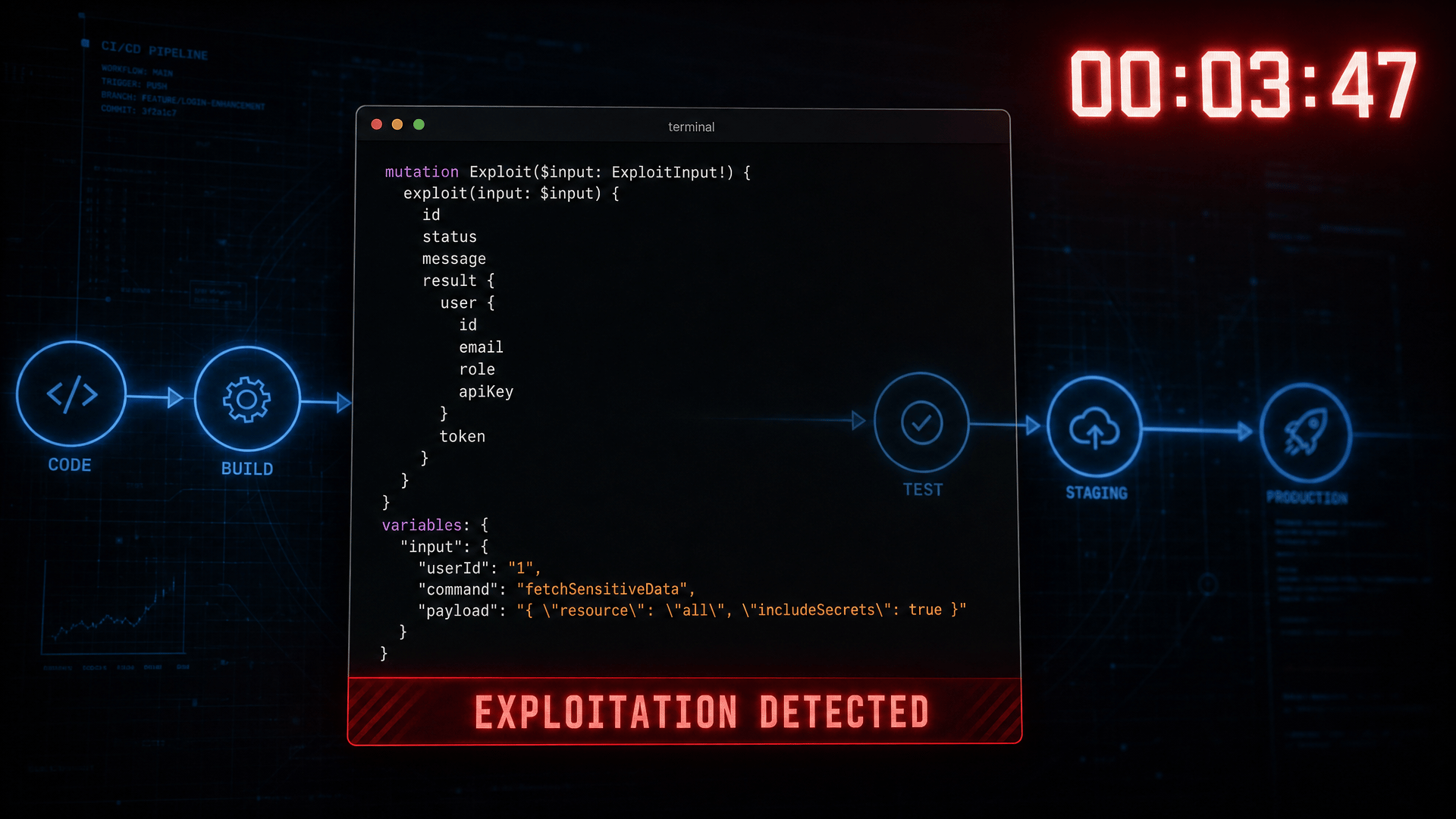
CVE-2026-19478 is an unauthenticated code injection vulnerability via a GraphQL directive affecting GitLab CE and EE versions 18.2 through 19.2; a single HTTP request is sufficient to delete projects, forge merge records, or escalate privileges on a self-hosted instance. watchTowr confirmed real-world honeypot attacks within minutes of GitLab’s out-of-band patch release on August 17
4) TrueConf CVE-2026-72529/72530: Russia-Linked Head Mare Exploits On-Premises Video Conferencing to Deploy PhantomCore
On August 20, CISA added two TrueConf Server vulnerabilities to its Known Exploited Vulnerabilities catalogue. CVE-2026-72529 is a missing authentication vulnerability that allows a remote attacker with access to TCP port 4307 to call undocumented TrueConf functions and execute arbitrary scripts on the server. CVE-2026-72530 is a code injection vulnerability that allows escape from TrueConf’s isolated execution environment to run commands directly on the host system. Exploited in combination, the two flaws give an unauthenticated remote attacker full code execution on the host. The Head Mare hacktivist group, assessed as Russia-linked and documented targeting Eastern European government and industrial organisations, has been actively exploiting the chained pair to deploy PhantomCore malware. Patches are available in TrueConf Server versions 5.3.9, 5.4.9, and 5.5.5, released in June 2026.
TrueConf is deployed specifically by organisations that prefer to keep communications off third-party cloud infrastructure — government agencies, defence contractors, regulated industries, and organisations in jurisdictions with data localisation requirements. That positioning is exactly what makes it an attractive initial access target for intelligence-motivated actors. The Head Mare attribution places this in direct continuity with DIESEC’s documented 2026 pattern of Russian-linked actors targeting the communication layer as an entry point: MuddyWater used Microsoft Teams for social engineering in May; Head Mare is now exploiting on-premises video conferencing for code execution in August. The attack surface is not the specific platform — it is the category of infrastructure that carries internal conversations about decisions, strategies, and operations.
Deploying communications on-premises does not eliminate the attack surface — it transfers responsibility for its management to the organisation. An internal video conferencing platform that is not patched at the same cadence as public-facing infrastructure presents a trusted foothold with no external scrutiny and network access to everything reachable from the server.
Read more on: CISA Advisory and BleepingComputer

CVE-2026-72529 (missing authentication) and CVE-2026-72530 (code injection) are two TrueConf Server flaws chained by the Russia-linked Head Mare hacktivist group to deploy PhantomCore malware against Eastern European government and industrial targets. CISA added both vulnerabilities to its Known Exploited Vulnerabilities catalogue on August 20; patches were available in TrueConf Server versions 5.3.9, 5.4.9, and 5.5.5 from June 2026.
5) ShieldBreak CVE-2026-69414: Nightmare Eclipse Bypasses Microsoft’s Own Patch — No Fix After Ten Days
On August 12, security researcher operating under the name Nightmare Eclipse published a proof-of-concept for CVE-2026-69414 demonstrating a complete bypass of the patch Microsoft issued in June 2026 for RoguePlanet (CVE-2026-50656). The underlying race condition that RoguePlanet exploited remains reachable after the RoguePlanet fix is applied; a low-privilege local attacker can use the same technique to achieve SYSTEM-level privilege escalation on a fully patched Windows 10 or Windows 11 system. Microsoft rates the vulnerability CVSS 7.8 and “Exploitation More Likely.” CVE-2026-69414 was assigned on August 14. No patch had been issued as of August 25, ten days after CVE assignment — and the researcher published without advance MSRC notice, continuing the pattern of adversarial disclosure Nightmare Eclipse has maintained across four 2026 disclosures.
The category of risk this story represents is distinct from a conventional unpatched vulnerability. CVE-2026-69414 is evidence that a closed vulnerability ticket — one where the Microsoft-issued patch is confirmed installed, the CVE is marked remediated, and the item has been removed from the risk register — may not represent actual remediation of the underlying weakness. For organisations that applied the RoguePlanet patch in June and closed the ticket, the exposure has continued through August without any indicator that would surface in standard vulnerability management tooling. The practical implication reaches beyond this specific CVE: it establishes that for this class of Windows privilege escalation vulnerability, CVE closure and vulnerability remediation are not equivalent operations, and that periodic re-verification of closed items in the same CVE family is operationally necessary.
This is the fourth Nightmare Eclipse Windows escalation disclosure DIESEC has tracked in 2026 (RoguePlanet, BlueHammer, RedSun, UnDefend, and now ShieldBreak) and the first framed explicitly as a bypass of Microsoft’s own fix in the same vulnerability class. Organisations dependent on Windows Defender as their primary endpoint security layer should review the open Windows local escalation vector landscape — not only for unpatched CVEs, but for closed items in the Nightmare Eclipse research arc.
Read more on: Cybersecurity News and The Hacker News

CVE-2026-69414 is a CVSS 7.8 Windows privilege escalation that completely bypasses the patch Microsoft issued in June 2026 for RoguePlanet (CVE-2026-50656); the same underlying race condition remains reachable on fully patched Windows 10 and Windows 11 systems. Researcher Nightmare Eclipse published a proof-of-concept on August 12; no patch had been issued ten days after CVE assignment on August 14.
If Cybersecurity News Stories August 28, 2026 Has One Lesson, It’s This:
Five infrastructure categories — identity, operational technology, developer pipelines, internal communications, endpoint security. Five different vendors. Five distinct technical weakness classes. What they share is not a common CVE type or a common attack vector. What they share is the position they occupy in the trust architecture of any defended organisation: each is a system that manages, protects, or enables everything else. Entra ID determines who is authorised. Defender watches for threats on endpoints. GitLab holds the source code that becomes every product. TrueConf carries the conversations that shape decisions. Siemens PLCs run the physical processes that translate digital inputs into real-world operations. The elevated trust these components receive — because they are foundational, because they do the protecting — is the selection criterion.
The operational implication is that adversarial scrutiny cannot stop at the boundary of what organisations think of as target infrastructure. A mature attacker does not begin by compromising what the organisation protects. They begin by compromising what does the protecting. This week’s Cybersecurity News Stories August 28, 2026 are not five separate incidents that happened to occur in the same week. They are a single methodology applied across five different trust assumptions — and the methodology is effective precisely because those assumptions are rarely tested. The question this week’s stories demand is not which patches are missing. It is which categories of infrastructure have been exempted from the adversarial review applied everywhere else — and whether that exemption has already been noticed by someone other than a defender.
For more information, please contact us now!