
Why Endpoint Protection Isn’t Enough for Modern Small Businesses
Endpoint protection is where most small businesses start their cybersecurity journey — install antivirus or EDR software on every employee laptop, and assume the job is done. After all, if every device is covered, what else is there to protect? The problem is that much of today’s business activity no longer happens solely on those devices. Here’s why you shouldn’t stop at endpoint protection if you want genuinely better cybersecurity.
Why Endpoint Protection Still Matters
It’s not that endpoint security has become obsolete — quite the opposite. The endpoint security market is projected to be worth $28 billion by 2031. Endpoint protection platforms (EPP) and endpoint detection and response (EDR) solutions remain among the most important security controls available to small businesses.
Whether you’re running a legal practice, an engineering firm, an accounting office, or a growing retailer, your employees spend much of their day on laptops and workstations. Those devices are where they open emails, download documents, access customer records, and connect to the applications that keep your business running. Protecting them is essential.
Modern endpoint security also does far more than traditional antivirus. It can detect ransomware before files are encrypted, identify suspicious software, flag unusual behaviour on a device, and in many cases automatically isolate an infected laptop before an attack spreads to the rest of your business.
For many common threats, that’s exactly the protection you want. However, think about how your business actually operates today. Your team probably uses Microsoft 365 or Google Workspace for email and collaboration, stores documents in SharePoint, OneDrive, or Google Drive, joins Teams or Zoom meetings, logs into accounting software like Xero or QuickBooks, and accesses CRM, payroll, or project management platforms through a web browser. Those cloud services have become just as important to your business as the devices your employees use to access them.
That shift changes where cyber risk can emerge. While endpoint security remains a critical layer of defence, it can only protect what happens on the endpoint itself. As more of your business moves into the cloud, email platforms, networks, and online services, protecting your business means looking beyond the laptop.
How Your Business Has Expanded Beyond Endpoint Protection
Microsoft 365 and Google Workspace
For many small businesses, Microsoft 365 or Google Workspace has become the centre of day-to-day operations. Email, file sharing, calendars, Teams or Google Meet, and employee identities all live within these platforms. Common threats include:
- Business Email Compromise (BEC): attackers gain access to a legitimate mailbox and impersonate employees to redirect payments, request sensitive information, or deceive customers.
- Compromised user accounts: stolen credentials can provide direct access to emails, files, contacts, and internal conversations without any malware being installed on an employee’s device.
- Malicious mailbox rules: attackers use these to automatically forward emails or hide messages to maintain persistence and avoid detection.
- Excessive permissions and misconfigurations: incorrect sharing settings or overly permissive user roles can expose sensitive business data.
Cloud Applications
Accounting platforms, CRMs, payroll systems, project management tools, HR software, and other SaaS applications have become essential for many SMEs. Common threats include:
- Credential theft: a compromised login to Xero, Salesforce, HubSpot, or another business application can expose sensitive financial or customer data.
- Weak access controls: employees may retain access after changing roles or leaving the business, increasing insider and account compromise risks.
- Third-party integrations: connected applications often receive broad permissions, creating additional attack paths if one service is compromised.
- Data exposure: sensitive information may be unintentionally shared through cloud applications or misconfigured permissions.
Business Networks
Your office network, firewall, wireless access points, VPN, and internet connection all play a role in protecting your business. Common threats include:
- Unpatched network equipment: firewalls, routers, and switches frequently become targets when security updates are delayed.
- Poorly secured Wi-Fi: weak passwords, outdated encryption, or guest networks without proper segregation can provide attackers with an easy foothold.
- Open remote access services: exposed VPNs or remote desktop services remain common entry points for ransomware operators.
- Suspicious network activity: unusual connections or data transfers may indicate an attacker moving through your environment even when endpoint alerts remain quiet.
Remote and Hybrid Working
Many SMEs now support employees working from home, travelling, or accessing company resources from multiple locations. Common threats include:
- Personal devices accessing company data: employees may use unmanaged devices that don’t meet your security standards.
- Insecure home or public Wi-Fi: coffee shops, hotels, airports, and home networks typically lack the protections found in a business environment.
- Shadow IT: staff may adopt unapproved file-sharing or collaboration tools without IT oversight, creating new security blind spots.
- Identity-based attacks: once an attacker compromises an employee’s credentials, they can often access cloud services from anywhere in the world without needing physical access to a company device.
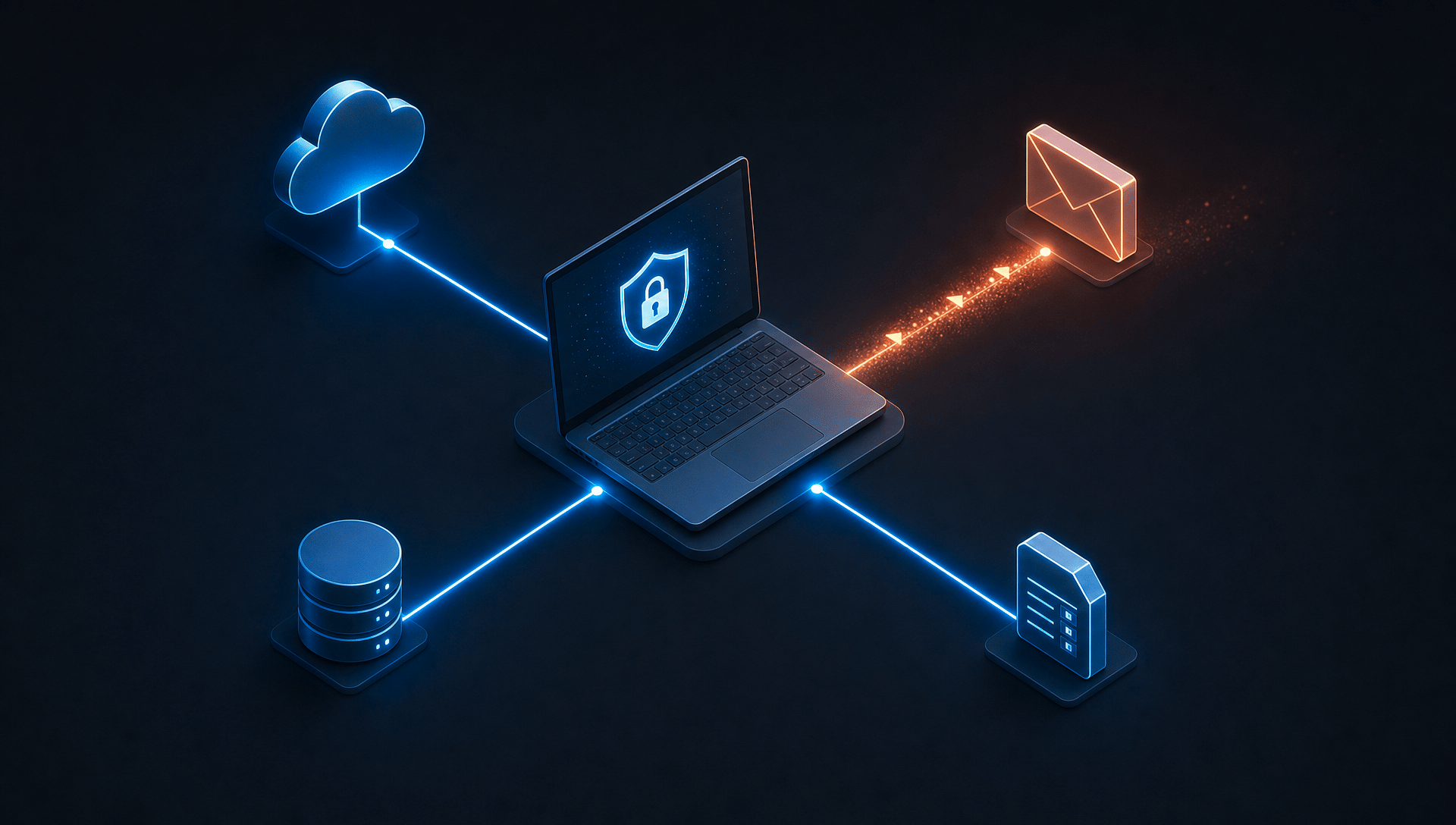
Endpoint Security Can’t Monitor What It Was Never Designed to Protect
None of these examples point to a failure of endpoint security. They simply highlight that endpoint protection was built with a specific purpose: monitoring activity on the devices where it is installed.
If an employee clicks a malicious attachment that launches ransomware, your endpoint protection has an opportunity to detect and stop it. If malware attempts to execute suspicious code or make unauthorised changes to the operating system, endpoint security is often your first line of defence.
But many modern attacks don’t rely on malware at all. An attacker who steals an employee’s Microsoft 365 credentials can log in from another country using a legitimate web browser. They can read emails, search for invoices, create forwarding rules, or send convincing payment requests without ever interacting with the employee’s laptop. From the endpoint’s perspective, nothing unusual has happened.
The same applies to many cloud-based attacks. A compromised CRM account, an exposed SharePoint folder, a misconfigured cloud storage bucket, or excessive permissions granted to a third-party application don’t necessarily generate the kind of activity an endpoint security product is designed to detect. The risk exists within the cloud service itself.
This is why cybersecurity has become a layered discipline. Different security controls monitor different parts of your business: endpoint protection watches your devices, email security helps identify phishing and malicious messages, cloud security tools monitor your SaaS platforms and identities, and network monitoring helps detect suspicious communications and unusual traffic patterns.
No single product provides complete visibility across every system your business relies on. Understanding those blind spots is the first step towards closing them.
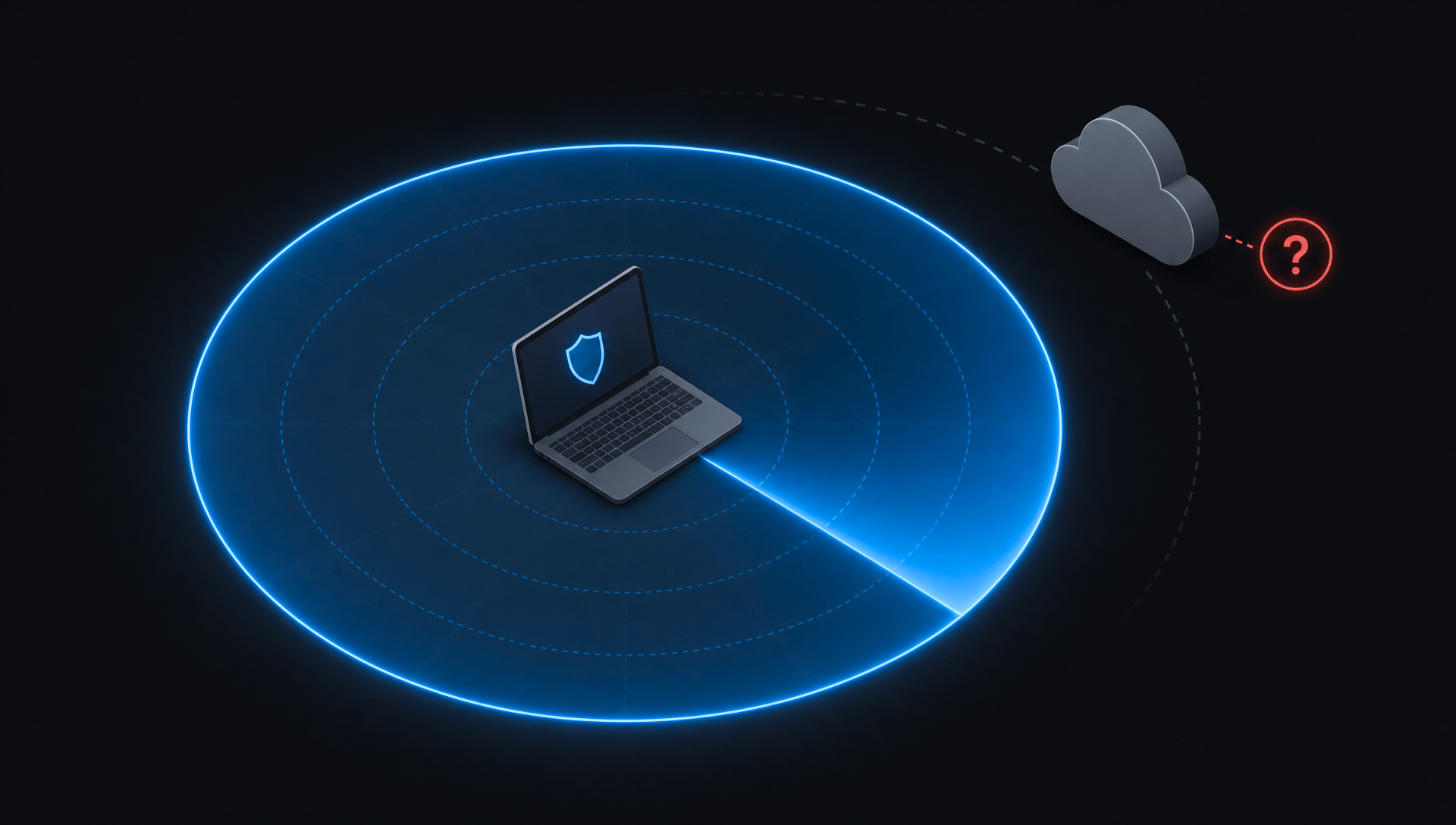
Endpoint Protection Is Part of Layered Security
As your business adopts cloud applications, embraces hybrid working, and stores more sensitive information online, different parts of your environment require different forms of protection. Endpoint security continues to play a critical role, but it’s most effective when combined with visibility across your email, networks, cloud services, identities, and other business-critical systems.
For large enterprises, building that layered security strategy often means investing in multiple specialist products: one platform monitors endpoints, another secures email, another analyses network traffic, while separate tools handle cloud security, vulnerability management, and identity protection. Dedicated security teams then spend time integrating, configuring, and managing them.
For most SMEs, that’s simply not realistic. Limited budgets, small IT teams, and competing business priorities mean every security investment has to deliver value without adding unnecessary complexity. Managing a collection of disconnected security tools can quickly become expensive, time-consuming, and difficult to maintain.
That’s why many small businesses are turning to integrated, modular cybersecurity solutions instead. DIESEC’s modular cybersecurity platform allows SMEs to build layered protection without having to assemble an entire security ecosystem themselves. Rather than forcing businesses to purchase and manage multiple standalone products, you can choose the security modules that match your needs — from endpoint protection and email security to network monitoring and cloud security. As your business grows, additional modules can be introduced without replacing your existing security strategy or investing in an entirely new platform.

Contact us to learn more.