
Revolut Data Breach: Trusted Channel Abuse
A recent Revolut data breach shows how attackers can exploit trust without breaking into a bank’s core infrastructure. By using a compromised Italian government email account to submit fraudulent customer-data requests, attackers reportedly persuaded Revolut staff to disclose sensitive information linked to roughly 680 customers across several European countries.
The incident exposed a second problem: how quickly public discussion assigns responsibility. Coverage and reader reaction have focused heavily on Revolut, while paying comparatively little attention to the compromised Italian government communication channel that made the fraudulent requests appear legitimate in the first place.
That reaction is understandable, but it does not fully explain the failure. Customers gave their information to Revolut, and Revolut disclosed it to an unauthorised party. At the same time, the attack path depended on a compromised government identity that gave the requests credibility from the start.
That makes the Revolut data breach relevant well beyond one fintech brand. It is a clear example of how a trusted channel can become an attack surface, and why authentication alone is not enough when an organisation receives a request for sensitive information.
What Happened in the Revolut Data Breach?
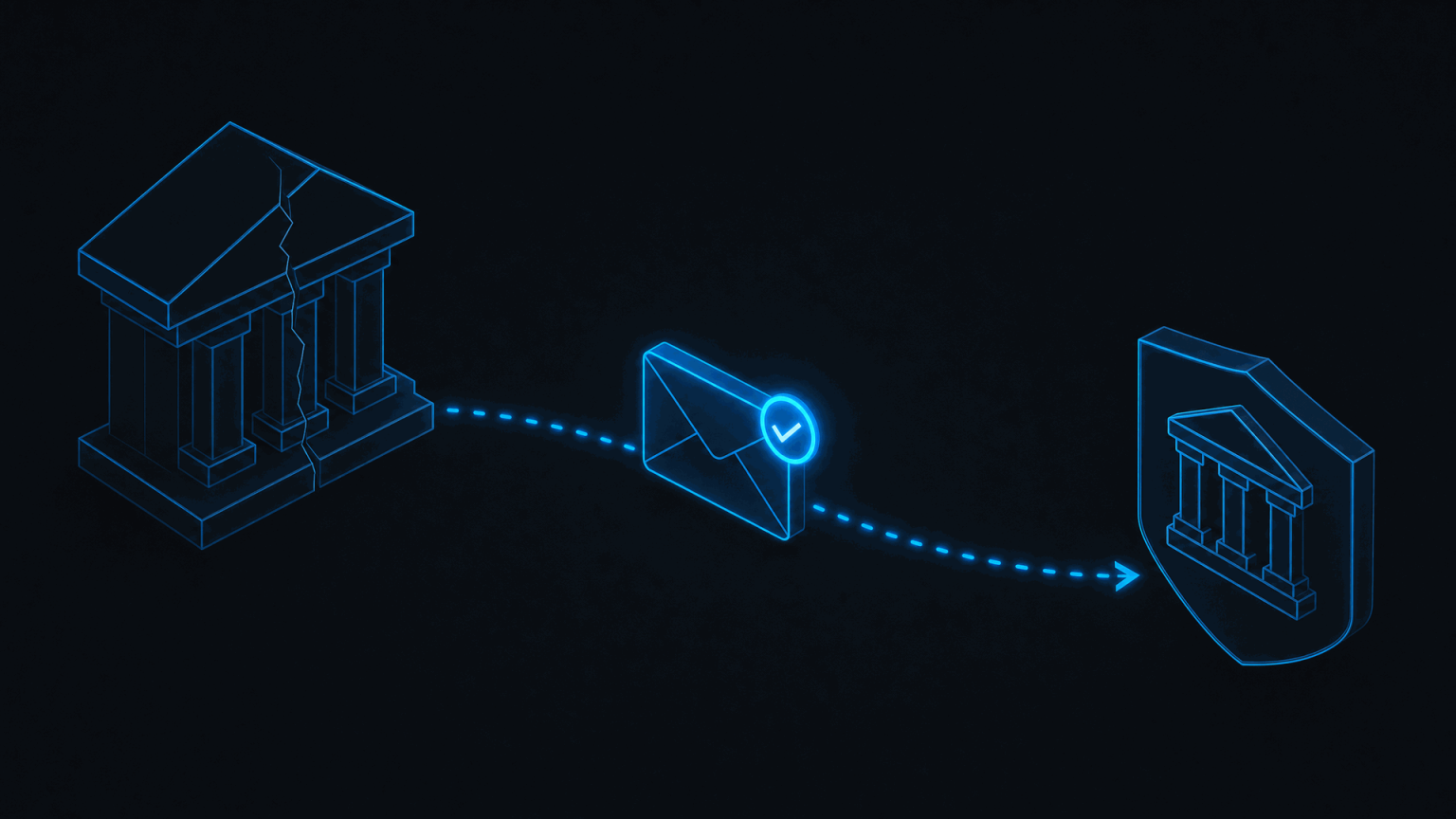
A request that looked government-issued and passed authentication checks was still fraudulent.
Revolut confirmed that an unauthorised third party used an email address on a legitimate Italian government domain to submit fraudulent requests for customer information. According to TechCrunch, the company disclosed some data before identifying the activity, then blocked the address and notified the relevant authorities and regulators.
Subsequent reporting linked the requests to Italy’s PEC system, a certified-email network used by Italian authorities, companies and private citizens for official correspondence. Security Affairs reports that a compromised government account was used to pose as law enforcement and request information on selected Revolut customers over a period of several months.
Reporting indicates that approximately 680 customers across several European countries may have been affected. The exposed information reportedly included names, dates of birth, addresses, phone numbers, copies of passports and driving licences, verification selfies, account statements and transaction histories, including some Bitcoin-related activity. According to the Irish Times, attackers reportedly used blockchain analysis to identify accounts holding significant amounts of cryptocurrency.
A group calling itself “iamnotavillain” later demanded a $3 million ransom, publicised through the Financial Times. Reuters reported that Revolut said it had received no direct contact or demand from the group. The company maintains that its core systems and customer funds were not compromised — a distinction that matters technically, but does not reduce the seriousness of the incident for the customers whose data was exposed.
This Was More Than Spoofing

A message can pass every authentication check and still be an unauthorised request.
It would be easy to describe this as a phishing or spoofing incident, but that framing oversimplifies what happened. In a typical spoofing case, an attacker merely imitates a sender identity. Here, reporting indicates that the fraudulent requests came through an actual government communication channel, using a compromised account that could pass normal authentication and trust checks.
That distinction matters for defenders. Technical checks such as SPF, DKIM and DMARC can confirm that a message travelled through an authorised channel. They cannot confirm that the person using that channel is authorised to make the specific request, or that the request itself is lawful and proportionate.
This is the core distinction between authentication and authorisation. A message can be technically authentic and still be operationally fraudulent. A trusted sender domain proves the route a message took, not that the underlying request should be honoured.
For organisations handling regulated or highly sensitive data, that is the central lesson of the Revolut data breach: a trusted domain, certificate or secure mailbox is not a complete approval mechanism on its own. Trust has to extend to the whole transaction, not just the communications path.
Why the Bank Received the Blame
The public criticism directed at Revolut is not hard to understand. Customers provided identity documents, photographs, financial information and transaction histories to a financial institution. That institution then disclosed some of that information to an unauthorised party, even though the request appeared to come from a government authority.
From a customer’s perspective, the technical explanation does not change the outcome. Their information was collected by Revolut, and the disclosure happened through a process Revolut controlled. The immediate question for most customers is not how the attacker first accessed a government mailbox — it is why stronger verification wasn’t applied before releasing highly sensitive information.
That pattern shows up in how the story has been discussed publicly. Financial institutions position themselves as trusted custodians: they require extensive know-your-customer documentation, collect personal and financial records, and assure customers that sensitive information will be protected. When those controls fail, the organisation holding the data becomes the most visible target of frustration.
The nature of the exposed data intensifies that reaction. A compromised password can be changed. A passport image, date of birth, home address, verification selfie or transaction history is far harder to replace or neutralise — the potential downstream consequences include identity fraud, targeted phishing and long-term privacy risk.
At the same time, blaming Revolut alone gives an incomplete picture. The reported attack involved multiple control failures: the compromise of a government account, the abuse of a trusted communication channel, the acceptance of fraudulent requests, and the disclosure of information to people who were never entitled to receive it. Attackers exploited a chain of trust in which more than one party had a role to play.
Trust Became the Attack Surface
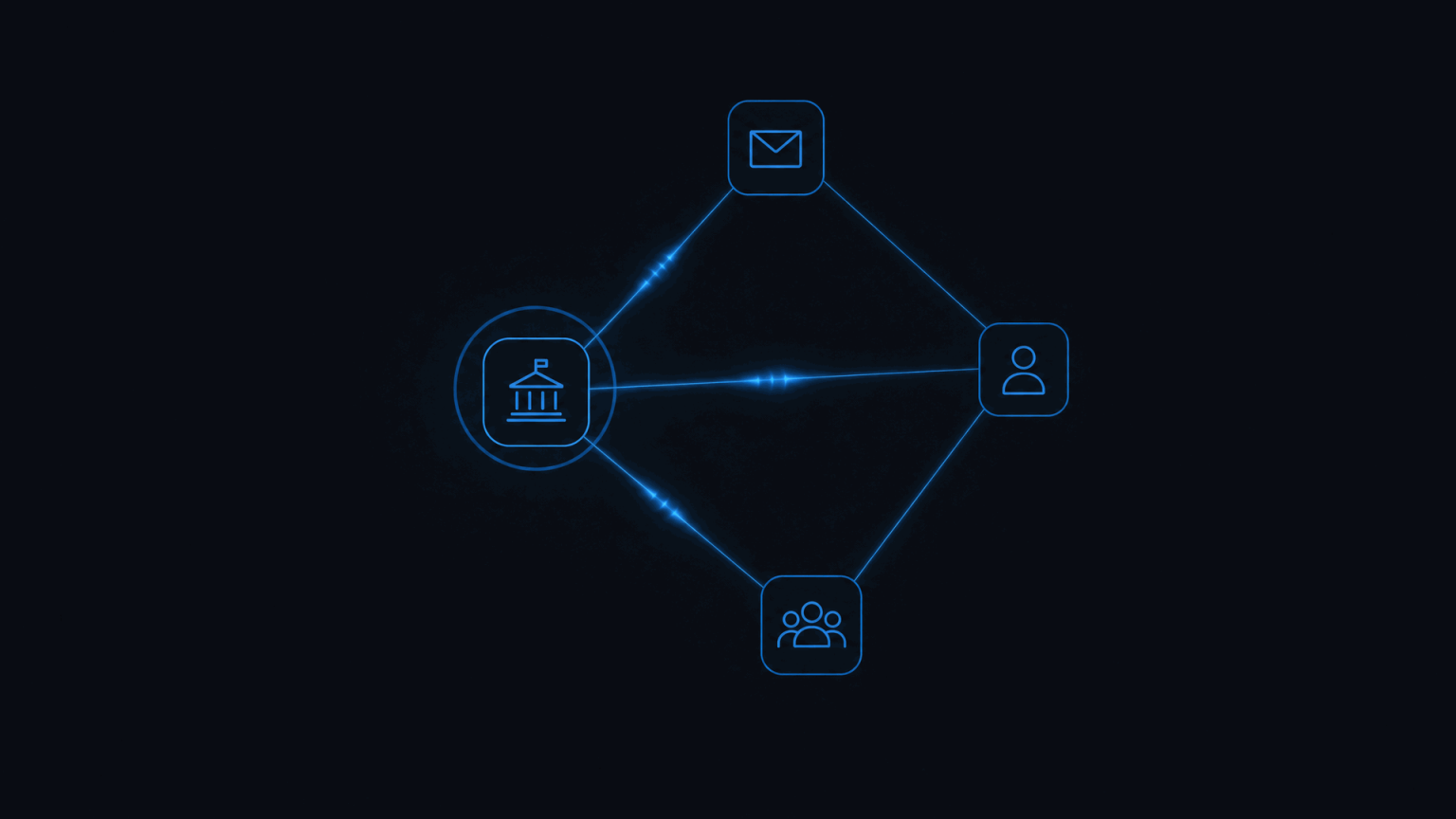
The same pattern shows up in compromised executive accounts, supplier threads, and trusted collaboration platforms.
The deeper lesson is that trusted infrastructure can itself become an attack surface when organisations use it as a shortcut for verification. A request arriving from a government domain often receives less scrutiny than one from an unfamiliar address, because staff assume official-looking correspondence has already passed meaningful checks upstream.
Attackers increasingly target that assumption rather than the underlying technology. The same pattern shows up in compromised executive email accounts, hijacked supplier threads, false legal demands sent through genuine mailboxes, or data-access requests delivered through trusted collaboration platforms. An attacker does not need to defeat every technical control if they can operate inside a channel people are already trained to trust.
That is why this case matters well beyond fintech. Any organisation handling personal, legal, financial or health data can face the same problem if it treats a trusted communications channel as proof that a request is trustworthy.
What Organisations Should Change
Organisations handling sensitive data should separate several distinct questions before approving a disclosure request: is the sender’s account genuine, is the person using it authorised, is the request legally valid, is the information requested necessary, and is the scope proportionate? None of those answers should depend on a single email address or domain.
High-risk requests should trigger independent verification through a pre-established contact method, rather than any phone number, link or contact detail included in the request itself. Where possible, a second employee should review the request — especially where it involves identity documents, account statements, transaction data or multiple customers.
Unusual request patterns deserve attention on their own: a sudden increase in government enquiries, requests involving unfamiliar jurisdictions, repeated demands tied to high-value customers, or urgent requests that bypass normal procedure should all trigger escalation to legal, privacy, fraud or compliance teams.
Logging matters just as much. Organisations should retain the original request, the verification steps taken, the decision-maker, the information disclosed and the justification for release — records that support internal investigations, regulatory response and future process improvements.
Security controls such as SPF, DKIM, DMARC, multi-factor authentication and endpoint protection remain necessary, but they solve a different problem. They protect accounts and verify message paths; they do not replace human and procedural checks before a sensitive disclosure.
Reputational Impact

Customers judge an incident by the outcome, not by which party was technically at fault.
The Revolut data breach shows why incident response can’t stop at containment. Revolut reportedly blocked the compromised address, contacted affected customers and notified authorities — necessary steps, but public trust also depends on whether the company can show it understands why the process failed and what will change as a result.
Customers are unlikely to distinguish between a direct breach of core systems and a trusted-channel failure. They are more likely to ask a simpler set of questions: was my information exposed, why was the request accepted, and could this happen again.
That is why reputational impact should be treated as part of the incident itself, not as a separate communications workstream. Public reaction reveals how customers assign responsibility, and whether a technical explanation reads as accountability or as an attempt to shift blame.
The government-account compromise matters. So does Revolut’s verification process. Both can be true at the same time.
The Broader Lesson
The Revolut data breach is a reminder that cybersecurity failures often occur between systems, organisations and assumptions rather than inside a single one. Attackers did not need to compromise Revolut’s core banking systems or customer funds — they used a trusted government identity to make an unauthorised request look legitimate.
For organisations handling sensitive data, the important question is not simply whether a request came from a legitimate domain. It is whether the organisation independently confirmed that a specific person was authorised to make a specific request for specific information.
That distinction is fundamental. Authentication can establish that a message travelled through a legitimate channel. Only independent verification, least-privilege disclosure and accountable approval can establish whether the requested action should actually be trusted.
Closing Thoughts

Building verification into the process, before the next trusted channel gets tested.
When a trusted channel becomes an attacker’s tool, the security boundary is no longer just the network or the application — it is the decision-making process around the data itself. That is exactly the kind of control gap DIESEC helps organisations close, through governance and ISO 27001 advisory work that turns verification and disclosure processes into a documented, auditable part of how sensitive-data requests get handled.
We hope this is useful to your team and leadership as you think through your own verification processes.